Physical Address
304 North Cardinal St.
Dorchester Center, MA 02124
Physical Address
304 North Cardinal St.
Dorchester Center, MA 02124

When disaster strikes, the gap between survival and tragedy often hinges on your medical preparedness. You’ve probably seen those flimsy store-bought first aid kits—they’re barely adequate for a paper cut, let alone a serious emergency. Building a personalized medical kit isn’t just smart prepping; it’s acknowledging that your family’s unique health profile deserves customized solutions. I’ve seen too many preppers stock bandages while forgetting their child’s asthma inhaler or grandmother’s heart medication. What might you be overlooking?
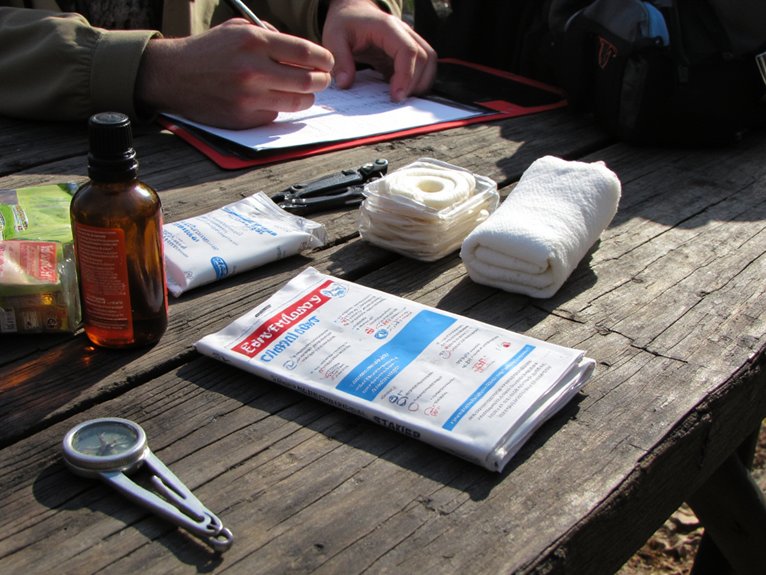
Before you purchase a single bandage or medication for your prepper medical kit, you’ll need to take an honest inventory of your family’s specific health needs. Do you have family members with diabetes, heart conditions, or allergies? These chronic condition management considerations should drive your preparedness strategy.
Don’t overlook mental health preparedness either. Disasters create psychological stress that can exacerbate existing conditions or trigger new ones. Include anti-anxiety medications if prescribed, and comfort items that might seem trivial now but become essential during crises.
Create a spreadsheet listing each family member, their conditions, medications, and allergies. I did this and discovered my daughter’s asthma inhaler was expired—a potentially dangerous oversight! Remember, the most exhaustive medical kit is useless if it doesn’t address your family’s unique vulnerabilities.
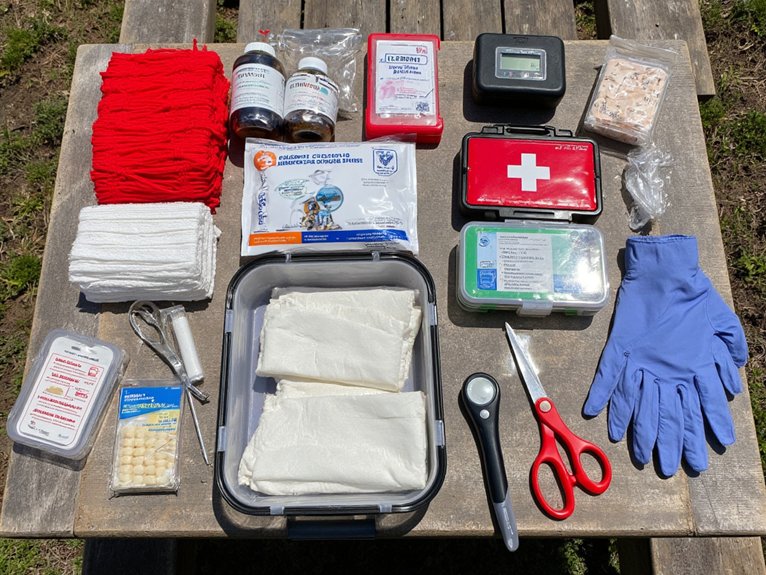
With your family’s specific medical needs identified, let’s move to the building blocks of any prepper medical kit. Every essential kit needs certain universal supplies, regardless of your situation. I’ve assembled thousands of kits and found these categories to be non-negotiable:
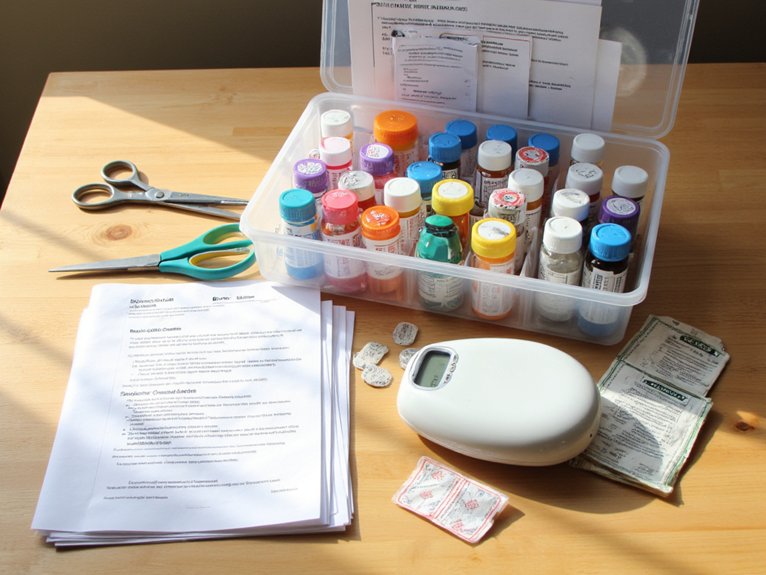
While prescription medications often get overlooked in prepper kits, they’re arguably the most critical component for anyone with chronic conditions. Your prescription management strategy should include maintaining at least a 30-day supply of essential medications, properly labeled with dosage instructions. Remember, insulin and other temperature-sensitive medications require special consideration—those mini coolers aren’t just for picnics!
Documentation security is equally important. Keep waterproof copies of all prescriptions, including generic names and dosages, plus a list of allergies and medical conditions. I’ve found that scanning these documents to an encrypted USB drive provides redundancy when paper gets wet or damaged. Your doctor might resist providing extra prescriptions “just in case,” but explain your preparedness goals—many physicians understand the importance of medication continuity during emergencies.
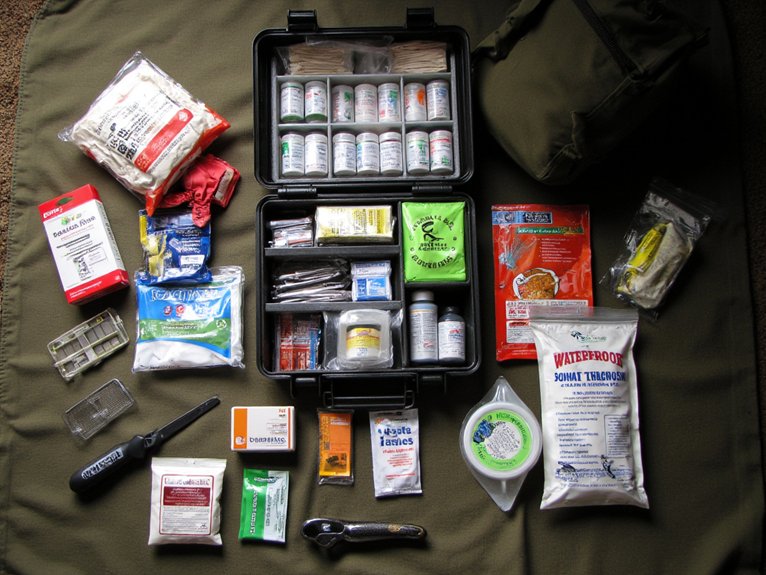
Advanced medical supplies often separate true preparedness from basic first aid once you’re facing extended isolation or disaster scenarios. When communication lines fail, you’ll need equipment that bridges the gap between wilderness survival and clinical capability. I’ve found these investments pay dividends during real crises.
Consider adding these critical components:
These tools require training, but they’re worth mastering. You’ll sleep better knowing you’re prepared for worst-case scenarios.
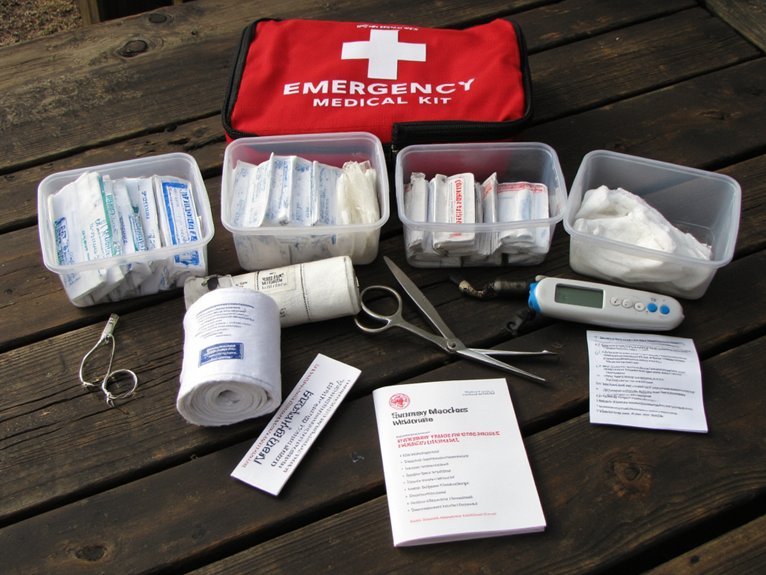
Because many emergencies occur when professional help isn’t immediately available, having the right medical tools and equipment can literally mean the difference between life and death. You’ll want to include quality trauma shears, a penlight, and a reliable stethoscope in your kit.
For more serious situations, consider some advanced surgical tools like hemostats, forceps, and suture kits—though don’t use these without proper training! Medical diagnostics equipment such as a blood pressure cuff, pulse oximeter, and digital thermometer will help you assess essential signs and make informed decisions.
Remember that fancy gadgets aren’t much use if you don’t know how to use them. I once bought an otoscope that collected dust for years until I finally learned its proper application. Prioritize tools you understand, then expand your collection as your skills grow.
Natural remedies and alternative medicine can be valuable additions to your prepper medical kit, especially when conventional options might be unavailable. You’ll want to familiarize yourself with essential herbs like echinacea for immune support, lavender for burns and anxiety, and raw honey as a natural antibiotic—all proven effective through centuries of traditional healing practices. While these alternatives shouldn’t completely replace modern medical interventions, they offer practical supplementary options that often require less storage space and have impressive shelf lives compared to their pharmaceutical counterparts.
In today’s uncertain world, herbal remedies offer a time-tested alternative when conventional medications aren’t available. You’ll want to learn basic plant identification skills before disaster strikes, allowing you to create powerful herbal infusions from your surroundings when needed.
Your prepper medical kit should include these versatile herbal powerhouses:
Store these herbs in airtight containers away from light and moisture. While not FDA-approved treatments, these remedies have centuries of use behind them. They’re not replacements for critical medications, but they’ll expand your medical options when traditional healthcare isn’t accessible.
Homeopathic remedies provide another layer of emergency preparedness that you’ll want to contemplate for situations when conventional medicine isn’t accessible. While controversial in mainstream circles, many preppers include options like Arnica 30C for bruising and trauma, and Apis mellifica for insect stings and allergic reactions.
I’ve found that combining traditional herbal medicine with homeopathic preparations creates a more robust emergency kit. Store your remedies in a cool, dark place in their original amber glass containers. They’ll last for years—sometimes decades—if properly maintained. Remember, these aren’t replacements for life-saving medications or treatments, but rather complementary options when professional care isn’t available. Hypericum for puncture wounds and Ledum for tick bites have saved my hiking trips more than once. The small pellets take up minimal space but might prove invaluable.
Traditional healing methods have sustained human populations for thousands of years before modern medicine emerged. When modern healthcare isn’t available, folk remedies can be surprisingly effective. I’ve seen incredible results using traditional herbs like echinacea, elderberry, and yarrow in my own preparedness planning.
Your prepper kit should include these time-tested healing approaches:
These traditional remedies don’t replace modern medicine, but they’re invaluable when pharmaceutical options aren’t available. They’re compact, multi-purpose, and—unlike many medications—won’t expire quickly. You’ll be surprised at their effectiveness.
Equipping your medical kit with reference materials and training resources is just as essential as stocking it with bandages and medications. In today’s digital age, emergency medical apps and telemedicine consultations can literally save lives when you’re off-grid. You’ll need trusted references that don’t rely on an internet connection, too.
| Resource Type | Recommendation | Notes |
|---|---|---|
| Field Guide | “Wilderness Medicine” by Auerbach | Extensive but portable |
| App | “First Aid by Red Cross” | Works offline after download |
| Training | Wilderness First Responder | Gold standard 70-hour course |
| Reference Cards | Laminated procedure cards | Waterproof and durable |
| Video Course | “Prep Medic” series on USB | No internet required |
Remember to practice using your resources before emergencies occur. The best reference material is useless if you’re fumbling through it for the first time while someone’s bleeding.
Proper storage of your medical supplies isn’t just about finding a container—it’s about creating a system that protects your investment and ensures everything works when you need it. You’ll want to rotate temperature-sensitive medications and check expiration dates quarterly, marking your calendar for these maintenance checks just as you would for smoke detector batteries. Consider using clear, waterproof containers with customized internal dividers so you can quickly locate that critical item when someone’s bleeding and your hands are shaking too much to read tiny labels.
When you’ve assembled your complete medical kit, the next critical challenge is creating a storage system that guarantees everything stays accessible, organized, and functional during emergencies. Your storage solution should protect supplies from moisture, temperature fluctuations, and physical damage while keeping water purification tablets and personal hygiene items readily available.
Consider these proven storage options:
Even the most meticulously assembled medical kit becomes dangerous rather than helpful if you’ve forgotten to check expiration dates or replace used items. Set a quarterly reminder on your calendar to thoroughly inspect every component. Medications, particularly liquid antibiotics and insulin, degrade faster than you’d expect.
Your inventory management system doesn’t need to be fancy—a simple spreadsheet noting expiration dates works wonders. During inspection, ask yourself if your kit customization still matches your family’s changing medical needs. Has anyone developed allergies? Started new medications?
Don’t just check dates—look for packaging damage, discoloration, or unusual odors. Rotate supplies using the “first in, first out” principle, just like grocery stores do. And remember, that ancient tube of antibiotic ointment that’s turned an interesting shade of yellow? It’s not “still good enough for emergencies”—it’s trash.
As you’re building your prepper medical kit, it’s vital to recognize that different family members have unique health needs that can’t be addressed with a one-size-fits-all approach. Children require special pediatric dosing and child safety considerations, while elderly family members might need specific medications or mobility aids. Don’t forget your furry companions—pet first aid supplies are just as important.
For a thorough family medical kit, remember to include: