Physical Address
304 North Cardinal St.
Dorchester Center, MA 02124
Physical Address
304 North Cardinal St.
Dorchester Center, MA 02124
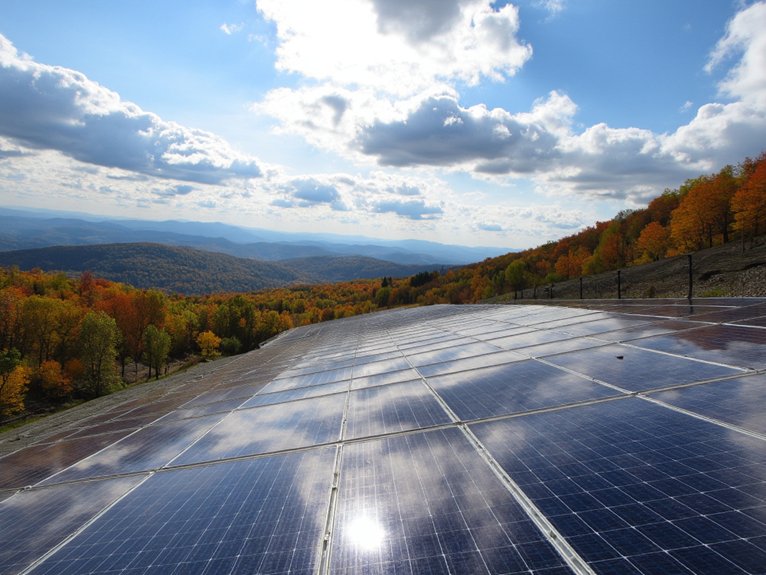
You’ve probably noticed that even identical solar systems can produce dramatically different results. That’s because maximizing solar output isn’t just about installation—it’s about optimizing for your specific climate. Whether you’re battling heavy snowfall in Minnesota, intense heat in Arizona, or persistent cloud cover in Seattle, there’s a constellation of adjustments that can boost your energy harvest by 15-30%. Let’s uncover these climate-specific techniques that most installers won’t tell you about.

While many homeowners install their solar panels and forget about them, you’re missing out on significant energy production if you don’t adjust their angle seasonally. Panel tilt directly impacts efficiency, with potential gains of 20-40% when optimized.
For seasonal adjustments, follow this simple rule: tilt equals your latitude in spring/fall, subtract 15° in summer, and add 15° in winter. If you’re at 40° latitude, your winter setting should be 55° from horizontal. I’ve found that even quarterly adjustments can boost your output significantly.
Can’t climb onto your roof four times a year? Consider investing in automated tracking systems or adjustable mounting brackets. They’re pricier upfront but pay dividends over time. Remember, the sun’s position changes dramatically between seasons—ignoring this fact is like leaving money on your roof!

You’ll find that microinverters transform power right at the panel level, unlike traditional string inverters that handle multiple panels at once. When shadows fall across one panel in a traditional system, they can drag down the performance of the entire array, but microinverters allow each panel to operate independently—maintaining efficiency even when some panels are shaded. The per-panel monitoring capability lets you track the performance of individual solar panels through user-friendly apps or web interfaces, making it easier to spot problems and optimize your system’s output.
When a shadow falls across traditional solar panels, it’s not just blocking sunlight from one section—it’s potentially compromising the entire system’s performance. With microinverters, you’ll experience superior shade tolerance that can dramatically improve your energy harvest in urban shading conditions or challenging panel placement scenarios.
| Shading Scenario | String Inverter Impact | Microinverter Advantage |
|---|---|---|
| Tree Shadow | Up to 50% system loss | Only affected panels lose output |
| Chimney/Vent | Entire string reduced | Neighboring panels work at 100% |
| Morning/Evening | Delayed start/Early stop | Each panel works independently |
| Seasonal Changes | Reduced winter output | Maximizes available light year-round |
| Debris/Snow | System bottlenecked | Unaffected panels continue producing |
You’re fundamentally getting insurance against environmental factors you can’t control. Each panel operates independently, so one shaded module won’t bring down your entire array’s production.
Beyond shade tolerance, microinverters enable another powerful capability: granular per-panel monitoring. You’ll gain insights into each panel’s performance, not just the system as a whole. When one panel underperforms due to bird droppings, fallen leaves, or degraded solar panel materials, you’ll know immediately.
This visibility is impossible with traditional string inverters, where problems often go undetected for months. I’ve seen clients save thousands by catching issues early through their monitoring apps. Plus, inverter compatibility becomes less restrictive—you’re free to mix different panel types as your system expands.
Think of it like having a fitness tracker for each panel rather than just knowing your overall health. It’s the difference between “something’s wrong somewhere” and “panel #7 needs attention right now.” That specificity is priceless.

Despite their remarkable efficiency in sunny conditions, solar panels face unique challenges in northern climates where snowfall can markedly reduce energy production. You’ll need strategies to maintain your system’s performance during winter months. Steeper installation angles (40-60°) help snow slide off naturally, preserving solar panel durability and extending inverter lifespan.
| Strategy | Effectiveness | Cost |
|---|---|---|
| Roof rake | Moderate | $ |
| Heating elements | High | $$$ |
| Tilt adjustment | Very high | $$ |
Don’t use water to remove snow—the thermal shock can damage panels. Instead, wait for natural melting or use a soft-bristled brush. Most importantly, you’ll want to factor snow management into your initial installation planning rather than scrambling for solutions mid-winter. Your system’s design should accommodate your region’s typical snowfall patterns.

Bifacial solar panels might sound fancy, but they’re simply double-duty champions that collect sunlight from both sides—capturing direct rays from above and reflected light from below. You’ll see impressive gains in northern regions where snow acts like a natural mirror, bouncing up to 90% of light back toward your panels’ undersides during winter months. This reflected-light bonus can boost your system’s annual energy yield by 5-30%, depending on installation height, ground reflectivity, and orientation—a clever way to squeeze more electricity from the same roof space.
How effectively can you harness solar energy when the sun isn’t cooperating? Bifacial panels offer a clever solution by capturing light from both front and back surfaces. They’re transforming solar panel durability standards while extending inverter lifespan due to optimized power flows.
The secret to bifacial efficiency lies in four key principles:
You’ll pay about 10-15% more upfront for bifacial technology, but the extra electricity generated—especially during dawn, dusk, and cloudy days—typically delivers ROI within 2-3 years in appropriate installations.
When winter blankets your solar installation with snow, you’re not looking at a problem—you’re looking at potential. Snow’s high albedo effect can boost energy capture by 15-30% through reflection, especially with bifacial panels.
You’ll get the most benefit when using advanced solar panel materials like N-type silicon, which responds better to diffuse light than standard P-type cells. The magic happens when your inverter technology adjusts to these fluctuating input conditions—modern MPPTs actually recognize and optimize for snow reflection scenarios.
Ever notice how you can get sunburned while skiing? That’s the same principle working for your panels. The snow beneath your array essentially becomes a second sky, bouncing otherwise lost photons back up for capture. It’s nature’s free efficiency upgrade!

Why do static solar panels fail to maximize energy capture? Simply put, they can’t adjust to the sun’s changing position. When I installed my first system, I was shocked to discover my energy production dropped by 30% in winter months! Modern tracking systems, utilizing advanced solar panel materials and inverter technologies, solve this problem elegantly.
These trackers offer distinct advantages:
You’ll pay more upfront for tracking systems, but they’ll considerably shorten your ROI timeline in most climates.

While tracking systems optimize your solar panel’s positioning, they can’t control the weather. That’s where battery storage solutions become your cloudy-day superhero. Modern lithium-ion and flow batteries can store excess energy generated during sunny periods for use when clouds roll in.
You’ll want to pair your storage system with high-efficiency solar panel materials like monocrystalline silicon or perovskite cells, which perform better in low-light conditions. Recent inverter innovations also help maximize energy capture during overcast days by operating at lower voltage thresholds.
I’ve found that a properly sized battery system—typically 10-14 kWh for an average home—can provide reliable power through 2-3 consecutive cloudy days. Remember, the goal isn’t just surviving cloudy stretches; it’s maintaining energy independence regardless of what Mother Nature throws your way!

Although desert regions receive abundant sunlight for solar power, excessive heat can markedly reduce panel efficiency—sometimes by up to 25% during peak temperatures. You’ll need targeted cooling strategies to maximize your desert installation’s output.
Here are proven heat mitigation techniques I’ve seen deliver remarkable results:
Proper inverter placement isn’t just about convenience—it’s vital for system performance. I’ve found that north-facing, shade-protected locations extend inverter lifespan considerably. Similarly, investing in panels with high temperature coefficients enhances panel durability, preventing degradation from thermal cycling that plagues desert installations.

You’ll find your solar panels need different care depending on where you’ve installed them — desert systems might require weekly dust removal during dry seasons, while coastal arrays benefit from monthly salt-spray cleaning. In harsh environments like industrial zones or areas prone to sandstorms, your maintenance protocols should include protective coatings and specialized wiping techniques that won’t scratch the delicate panel surfaces. Establishing efficiency-preserving routines that account for your local climate patterns isn’t just good practice — it’s the difference between peak power generation and watching your investment literally gather dust.
Depending on where you’ve installed your solar panels, seasonal changes can dramatically affect their performance and cleaning needs. I’ve found that adapting your cleaning approach to each season considerably impacts both solar panel longevity and inverter lifespan. Your panels face different challenges throughout the year, requiring tailored strategies.
Seasonal cleaning priorities should include:
Harsh environments present unique challenges that go well beyond standard solar panel maintenance routines. In desert regions, you’ll face relentless sand and dust accumulation, while coastal areas bring corrosive salt spray that can deteriorate frames and connections. Don’t underestimate how quickly debris accumulation can reduce efficiency by 25-30% in just one season!
For extreme climates, you’ll need monthly inspections rather than quarterly ones. I’ve found that applying silicone-based repellents to panel surfaces helps minimize buildup in dusty regions. Pest control becomes critical in rural areas—birds nesting under panels and rodents chewing wires are surprisingly common problems. A simple mesh barrier installation can save you thousands in repair costs. Remember: what works for temperate zones won’t cut it when you’re dealing with Mother Nature’s more dramatic moods.
When establishing efficiency-preserving routines, regular cleaning schedules become the backbone of any successful solar installation’s performance. You’ll notice dramatic differences in energy production when you maintain clean panels, especially in dusty or high-pollen environments. I’ve seen systems lose up to 25% efficiency from simple dirt buildup!
Your maintenance routine should include:
Don’t overthink the cleaning process—sometimes simple water works better than expensive solutions. Trust me, I’ve tried them all! Schedule your maintenance during early morning hours when panels are cool, reducing the risk of thermal stress on components.

As solar technology has evolved over the past decade, weather-responsive smart controls and monitoring systems have become essential components of efficient solar power installations. You’ll find these systems don’t compromise solar panel aesthetics; most modern monitors are sleek and unobtrusive, preserving your home’s curb appeal while quietly optimizing performance.
What’s even better? Many governmental incentives now specifically reward smart system integration. You’re fundamentally getting paid to increase efficiency! These intelligent systems adjust output based on real-time weather forecasts, automatically tilting panels when possible and regulating power flow during cloudy periods. They’ll send alerts to your phone when performance dips, often identifying issues before they become problems. Trust me, there’s nothing quite like checking your system’s performance during a rainstorm and seeing it’s already made adjustments you hadn’t even considered.

Since trees and buildings cast shadows that dramatically impact solar panel performance, conducting a thorough shade analysis is arguably the most critical pre-installation step for suburban homeowners. You’ll want to track shadow patterns across all seasons, not just summer. I’ve seen countless systems underperform because no one accounted for winter sun angles!
Effective tree management balances energy production with aesthetic value:
Your solar panels face challenges in seaside areas where salt corrosion and coastal degradation can reduce efficiency. You’ll need special coatings and regular cleaning to combat these damaging elements.
No, your solar panels can’t generate electricity at night due to solar panel limitations. However, you can use nighttime energy storage systems to access daytime-collected power after sunset.
You’ll need wildlife corridors and habitat preservation around your solar installations. Install perimeter fencing with animal passages, native vegetation, and regular monitoring to minimize impact on local species’ movement patterns.
Your solar panels suffer during extreme temperature swings. High heat decreases efficiency while cold boosts it. Watch for thermal expansion stressing connections and material degradation from freeze-thaw cycles over time.
You’ll see substantial cost savings with DIY solar installations, but you’re facing significant installation complexity. If you’ve got technical skills, it’s financially viable compared to professional setups.