Physical Address
304 North Cardinal St.
Dorchester Center, MA 02124
Physical Address
304 North Cardinal St.
Dorchester Center, MA 02124

When disaster strikes, your first instinct might be to head for a remote cabin in the woods—but that’s not always the smartest play. You’ll face competition from countless others with the same idea, turning your secluded sanctuary into a potential hotspot. I’ve learned through years of preparedness planning that unconventional bug-out locations often offer better survival odds. Underground urban spaces, community compounds, and mobile solutions each present distinct advantages that traditional cabins can’t match.
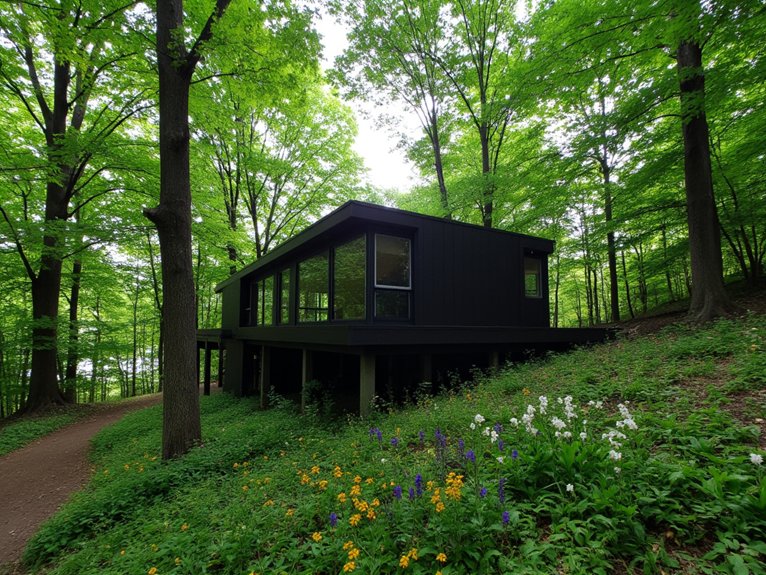
While most preppers envision remote cabins nestled deep in the wilderness as ideal bug out locations, you shouldn’t overlook the strategic advantages that urban settings can offer. Cities provide abundant resources, utilities that may function longer during crises, and the camouflage of normalcy.
Consider converting basement spaces into stealth shelters with reinforced walls and discrete entrances. You’d be surprised how a well-designed panic room can blend into existing architecture. Some forward-thinking urbanites have even created underground bunkers beneath garages or garden sheds—hiding in plain sight.
The key advantage? You’re already there. No need to navigate hazardous evacuation routes when trouble strikes. Your neighbors won’t suspect your apartment contains three months of supplies behind that innocent-looking bookcase. Remember: the best bug out location is often the one that doesn’t look like one at all.
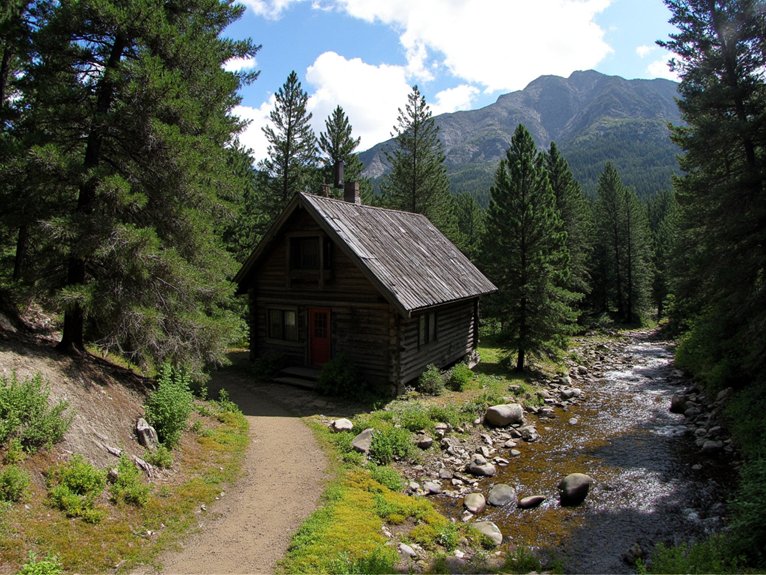
When building a community-based bug out location, you’ll discover that pooling resources creates efficiencies impossible to achieve alone—think shared watch rotations, specialized skills, and equipment that would bankrupt a solo prepper. Your group’s defensive capabilities multiply exponentially when organized properly, as coordinated security measures with overlapping fields of fire and mutual support become possible. While you might occasionally want to strangle your neighbor for snoring in the next shelter, the collective strength of diverse skills and round-the-clock security will far outweigh any interpersonal friction when the world goes sideways.
Although individual preparation is essential, shared resources in a community-based bug out location can exponentially increase everyone’s chances of survival. When you implement smart resource sharing and inventory management systems, you’ll avoid duplication while ensuring critical supplies remain available. I’ve seen communities thrive by pooling specialized equipment that would be impractical for individuals to maintain.
| Resource Type | Individual Approach | Community Approach |
|---|---|---|
| Medical | Basic first aid kit | Fully stocked clinic |
| Power | Small generator | Renewable grid system |
| Defense | Personal weapons | Coordinated security |
| Food Production | Garden plot | Diversified farm operation |
Despite the romantic image of the lone survivalist, community-based defensive strategies offer undeniable tactical advantages that you simply can’t achieve on your own. When threats emerge, a well-organized group can establish perimeter security, implement rotating watch schedules, and respond with coordinated defense—multiplying your effectiveness exponentially.
Communal security isn’t just about firepower (though having multiple trained defenders helps). It’s about sustainable vigilance. One person must sleep sometime; twelve people can maintain constant awareness. The psychological benefit is equally important: knowing you’re not alone.
Collective planning allows specialization too. While you’re an expert gardener, your neighbor might be a communications whiz. Together, you’ve covered more survival bases than either could individually. Remember, history’s most successful survival stories weren’t lone wolves—they were communities that banded together when things got tough.
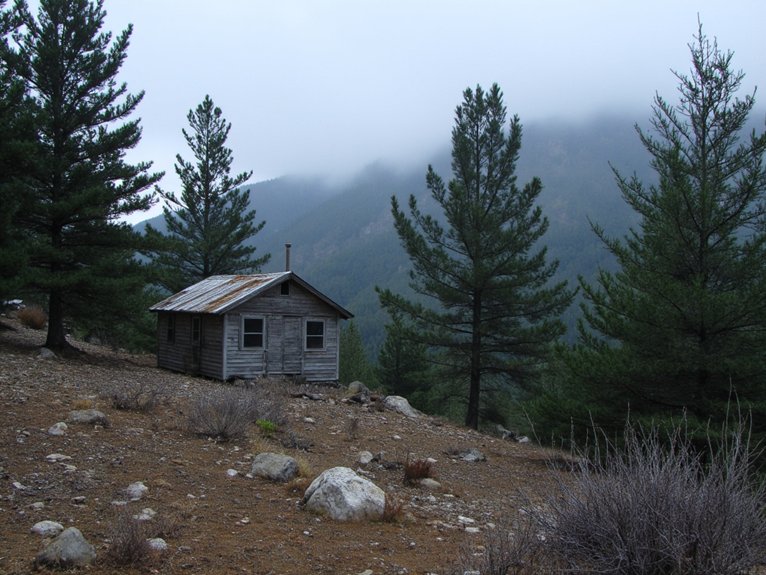
As threats in our environment continue to evolve, so too must your bug out strategies. Mobile shelters provide flexibility that fixed locations simply can’t match. I’ve seen firsthand how adaptable defenses—like quick-deploy perimeter alarms—can make the difference between safety and vulnerability.
Consider these mobile options based on key factors:
| Vehicle Type | Setup Time | Range (miles) | Defensibility | Comfort Level |
|---|---|---|---|---|
| RV/Motorhome | 15-30 min | 300-500 | Medium | High |
| Van Conversion | 5-10 min | 400-600 | Low-Medium | Medium |
| Truck Camper | 10-20 min | 350-550 | Medium | Medium-Low |
| Motorcycle+Tent | 20-30 min | 200-300 | Very Low | Low |
| 4×4 with Trailer | 30-45 min | 250-450 | Medium-High | Medium-High |
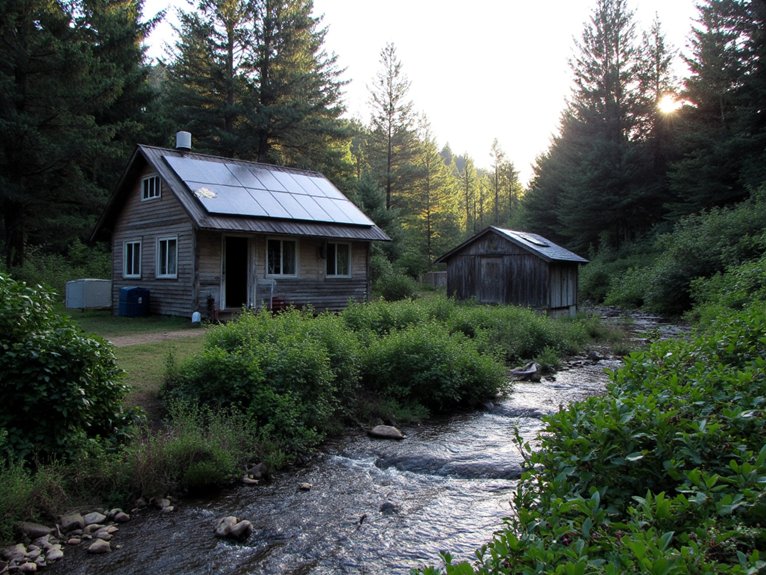
When selecting your bug out location, nothing matters more than mapping sustainable resources that’ll keep you alive long-term. Start by identifying water sources. Rivers and springs offer reliability, but you’ll need aquatic filtration systems—gravity filters work even without power. Don’t overlook rainwater collection!
For food, map wild edibles, game trails, and suitable gardening spots. Remember: calories aren’t optional when society collapses.
Energy independence requires forethought. Solar panels offer silent power, while small hydroelectric setups can provide consistent output if you’re near flowing water. Renewable energy isn’t just eco-friendly—it’s survival when the grid fails.
I’ve found that overlapping resource maps reveals sweet spots where water, food, and energy potential converge. These aren’t always the most picturesque locations, but they’re where you’ll thrive, not just survive.
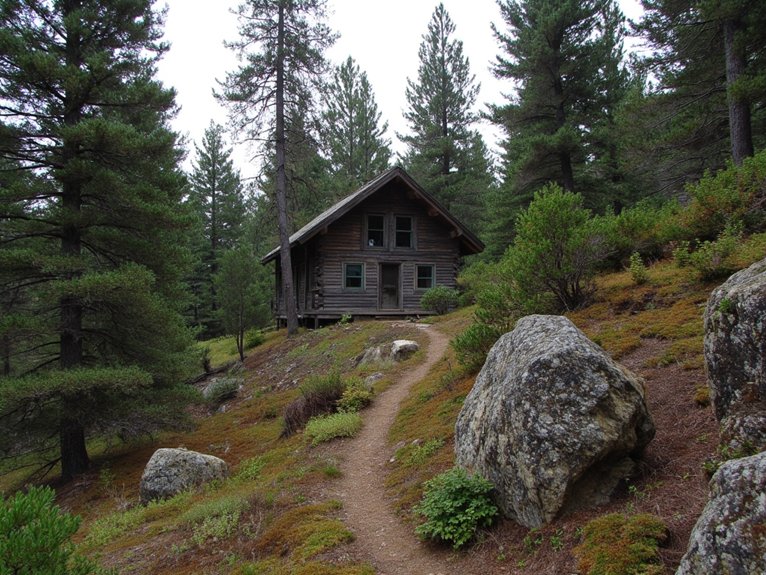
Securing your bug out location requires more than just abundant resources—you’ll need exhaustive protection from threats both human and environmental. Start with physical fence fortifications using natural barriers where possible; berms, thorny vegetation, and hidden trenches create effective obstacles without screaming “valuables inside!” I’ve found that multiple defensive rings work better than a single impenetrable wall.
Next, implement surveillance systems that don’t depend entirely on electricity. Combine high-tech options like motion sensors and trail cameras with low-tech solutions—strategically positioned mirrors, tripwires with noisemakers, and even trained dogs. Remember, the goal isn’t necessarily to create an impenetrable fortress (that’s rarely possible), but rather to create enough delay and early warning to give you time to respond appropriately. Your defense should be like an onion—layered, smelly to intruders, and capable of bringing tears to their eyes.
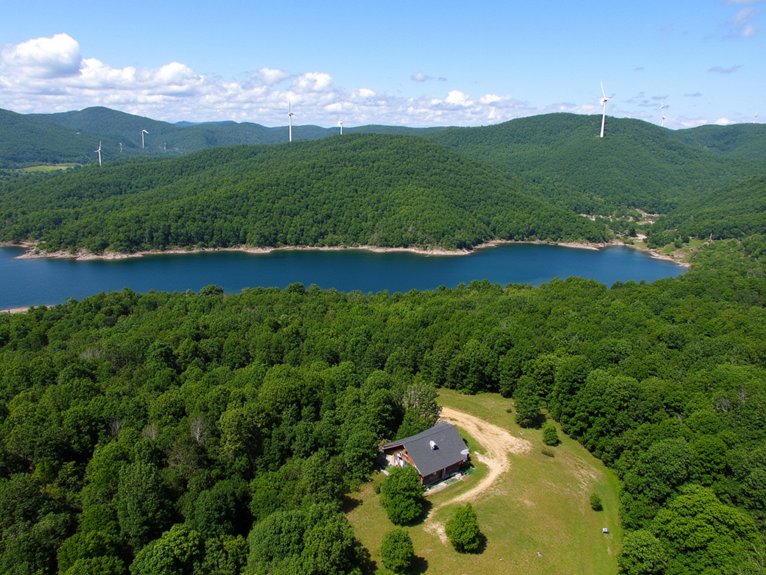
Climate resilience should be your foremost consideration when selecting a bug out location that’ll serve you for decades, not just seasons. You’re not just escaping temporary disasters; you’re positioning yourself against long-term climate shifts.
Analyze historical weather patterns, not just current conditions. Areas with stable precipitation, moderate temperature variations, and minimal extreme event histories offer better sustainability prospects. Water availability trumps almost everything else.
When developing renewable infrastructure, think beyond the obvious solar panels. Wind, micro-hydro, and geothermal options should align with your location’s natural advantages. Smart climate adaptation means selecting places that benefit from—rather than merely survive—changing conditions. The Midwest’s warming growing season or the Northeast’s increasing precipitation might actually enhance agricultural potential.
Remember: yesterday’s disaster-prone area might be tomorrow’s haven. Choose wisely.
You’ll need to research property rights in your chosen area, purchase land through legal channels, and secure proper legal documentation like deeds and titles to protect your investment.
You’ll need to assess your emotional resilience to isolation, distance from loved ones, and unfamiliar surroundings. Your risk assessment should consider both physical dangers and psychological comfort levels.
You should budget 10-25% of your annual income for a bug out location. Don’t forget cost considerations like taxes, maintenance, and insurance alongside initial property valuation when planning your investment.
You should evacuate when specific threats become imminent. Consider evacuation timing based on your emergency preparedness plan, taking action before transportation routes become congested or conditions deteriorate markedly.
Keep your plans offline, use disguise techniques when scouting, and establish secure communication protocols. Don’t share details with anyone outside your trusted circle, even when discussing indirectly.