Physical Address
304 North Cardinal St.
Dorchester Center, MA 02124
Physical Address
304 North Cardinal St.
Dorchester Center, MA 02124

You’ve prepared for emergencies, but have you considered your children’s specific needs? While your bug out bag stands ready by the door, kids require more than scaled-down versions of adult supplies. Their developing bodies, unique emotional requirements, and limited self-sufficiency demand thoughtful preparation. I’ve watched my own children fumble with oversized backpacks during drills—a stark reminder that emergency preparedness isn’t one-size-fits-all. Let’s explore what makes a child’s emergency kit truly effective.
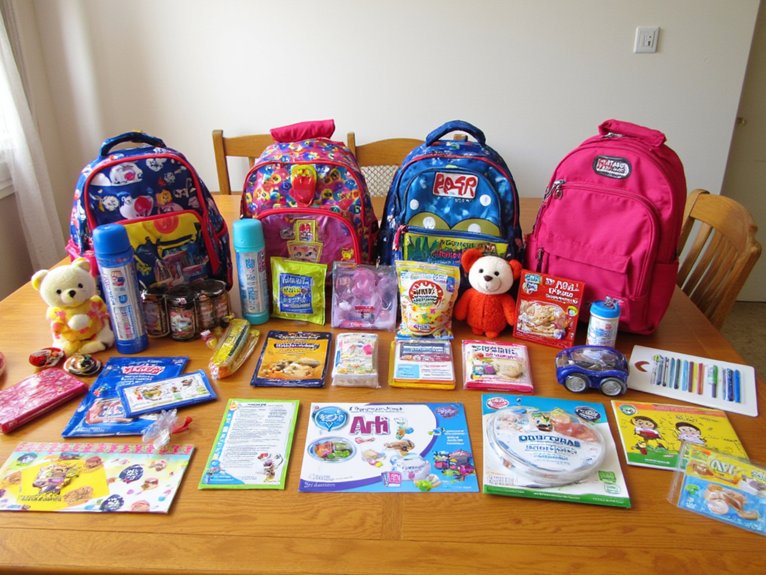
Why should children have their own emergency kits when adults already carry the family’s main bug out bag? It’s simple—children have unique needs and giving them personal responsibility builds vital survival skills. Your child’s kit should contain comfort items that adults might overlook, like their favorite small toy or family photos.
Kids’ bags should include their specific medications, properly sized clothing, and clear emergency contacts information. While you might remember these details under pressure, having them pre-packed eliminates guesswork. Don’t forget pet safety items if your child has responsibility for family animals—a small leash or pet medication could be stored in their kit.
Additionally, children carrying their own appropriately sized bags distribute weight across the family and ensure everyone can move quickly in emergencies. It’s not just practical—it’s empowering.
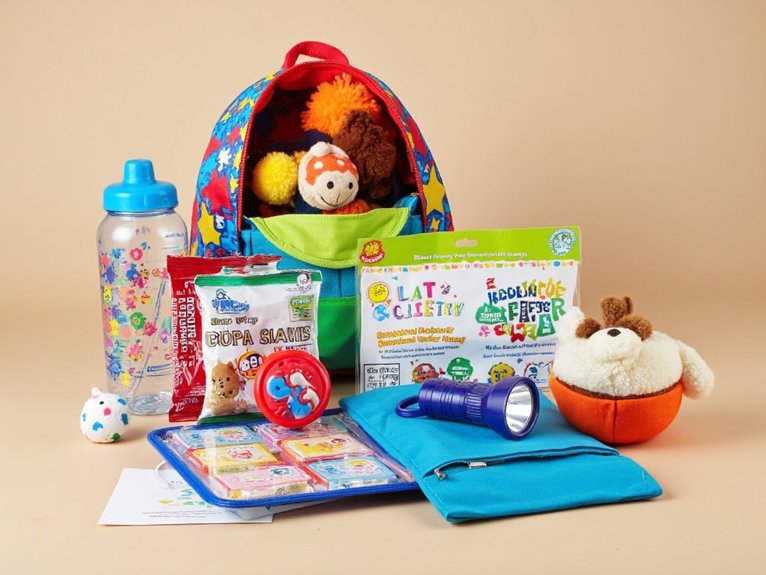
When building your child’s bug out bag, you’ll need to carefully tailor the contents based on their age and capabilities. Elementary-aged children (5-11) require simplified tools, comfort items, and picture-based instructions they can follow without adult help. Teenagers, on the other hand, can handle more sophisticated survival gear like multi-tools, advanced first aid supplies, and additional responsibility items that might include a battery bank or specialized communication device.
Although most parents focus on their own emergency preparedness, equipping your elementary-aged child (6-11 years) with their own properly sized bug out bag isn’t just cute—it’s essential. This age group can carry about 10-15% of their body weight safely, typically a small backpack with padded straps.
Start with hydration (a 16oz water bottle) and nutrition (granola bars, dried fruit). Include basic school supplies like a notepad and pencils—familiar items offer comfort and practical use. Add a small flashlight with extra batteries, child-sized work gloves, and a whistle. When selecting a comfort item, prioritize toy safety—avoid items with small detachable parts that could become choking hazards. A small stuffed animal or card game weighs little but provides immense psychological support during stressful situations.
As children grow into teenagers (12-17 years), their bug out bag capabilities expand considerably. They’re ready for more responsibility and can carry about 20% of their body weight. Your teen’s kit should include multi-tools, advanced first aid supplies, and navigation tools like compasses or GPS devices (with extra batteries). Unlike younger kids, teens can handle fire starters and basic survival tools.
Safety planning for teens should involve them in the preparation process. Let them customize portions of their kit—they’ll be more likely to use what they’ve chosen. Consider including a personal emergency contact list, relevant medications, and even a simple ham radio if they’ve shown interest. Teenage kit essentials should balance practicality with their growing independence. Trust me, they’ll appreciate being treated as capable contributors to family emergency readiness rather than helpless dependents.
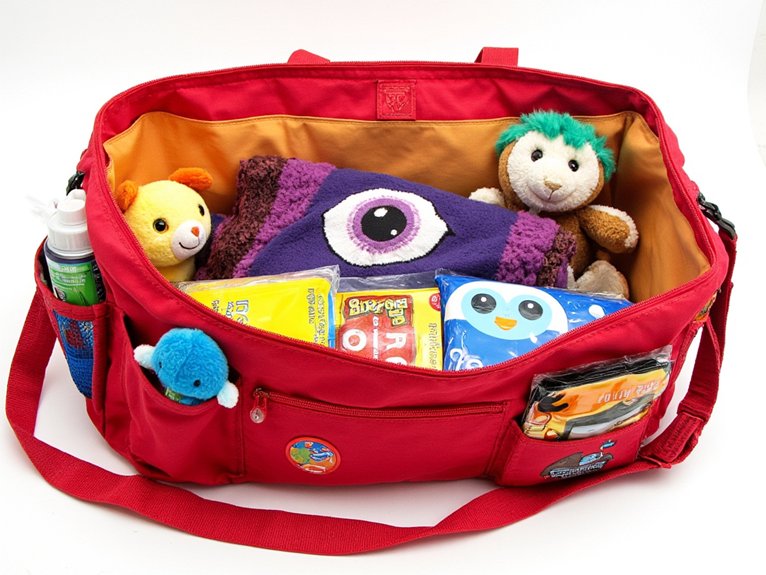
During a crisis, your child’s emotional well-being is just as essential as their physical safety. Include familiar comfort items in their bug out bag—a small stuffed animal, favorite book, or cherished blanket can provide immense psychological support during uncertain times. Trust me, I’ve seen even the toughest kids cling to these tokens when everything else feels chaotic.
Don’t overlook sensory tools like stress balls, fidget spinners, or noise-canceling headphones, which can help manage anxiety when environments become overwhelming. A small journal and colored pencils give children an outlet to process their emotions. For older kids, include family photos or handwritten notes of encouragement—these seemingly simple additions serve as powerful emotional anchors. Remember, a child who feels emotionally secure will be more resilient and cooperative during emergency situations.
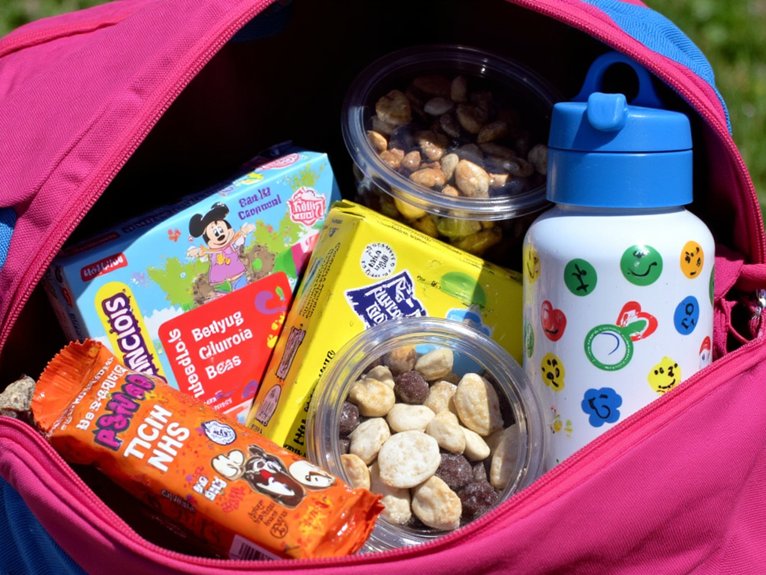
When selecting food and water for your child’s bug out bag, proper nutrition becomes even more critical than for adults, since kids have unique dietary requirements during stressful situations. Pack nutrient-dense, child-friendly snacks that won’t spoil: think nut butter packets, dried fruits, and protein bars specifically formulated for growing bodies. Avoid sugary treats that cause energy crashes.
For hydration strategies, include a durable water bottle with a built-in filter—kids can lose water faster than adults during emergencies. Consider electrolyte powder packets too; they’re lightweight and can transform plain water into a hydration powerhouse when your little one refuses to drink enough. Remember that children dehydrate quicker than adults and may not recognize thirst cues during stress. Pre-portion everything, as kids aren’t great at rationing.
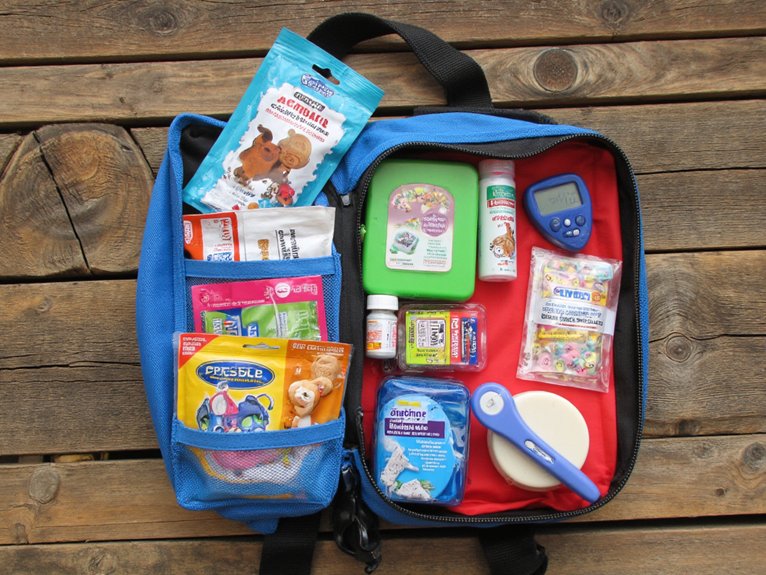
Medical supplies for your child’s bug out bag require more personalization than you might initially think, especially since younger bodies often respond differently to injuries and medications than adults do. Children’s dosages aren’t simply smaller versions of adult medications!
For proper medication storage, invest in waterproof containers labeled with clear dosing instructions. Temperatures fluctuate in emergency situations, so choose containers that offer some insulation. Don’t forget allergy management supplies if your child has known sensitivities – their EpiPen or antihistamines could be lifesavers.
Beyond prescription needs, include kid-sized bandages, alcohol wipes, tweezers for splinters (which somehow find children first!), and a digital thermometer. Remember, a child with fever needs monitoring more urgently than an adult with the same temperature. Include a small medical reference card with your child’s weight, allergies, and medication schedule.
While medical supplies address one aspect of emergency preparedness, protecting your child from the elements is equally important and often overlooked. Weather preparedness means thinking beyond just a spare outfit. You’ll need to pack clothing layers that accommodate sudden temperature changes—think thermal underwear, moisture-wicking t-shirts, and water-resistant outer shells.
I’ve learned the hard way that children cool down (and heat up) faster than adults. Pack a compact poncho, heat-reflective emergency blanket, and waterproof gloves. Don’t forget a hat that shields from both sun and cold! One breathable fleece hoodie can work wonders as both pillow and warmth. Remember the rule: cotton kills in wet conditions. Instead, opt for synthetic or wool blends that insulate even when damp—a literal lifesaver when you’re miles from shelter.
When preparing your child’s bug out bag, you’ll want to include kid-friendly communication tools like a whistle, a laminated card with emergency contacts, and perhaps a simple walkie-talkie set. Teaching your children exactly where to meet if separated—whether it’s at a neighbor’s house, a local landmark, or back at your vehicle—transforms abstract emergency plans into concrete action steps they can follow. Remember to practice these reunion procedures regularly through “find mom and dad” games, turning potentially scary scenarios into familiar routines your kids can execute with confidence.
How will your child reach you if you’re separated during an emergency? Reliable communication tools are essential for child safety during crisis situations. I’ve tested dozens of options with my own kids, and these three consistently perform best in emergency communication scenarios:
If you’ve ever lost track of a child in a crowded mall, you’ll understand why predetermined reunion points are absolutely critical in your emergency planning. Kids need crystal-clear instructions about where to meet if separated during an evacuation or emergency.
Establish primary and backup meeting locations—one near your home and another farther away in case your neighborhood is inaccessible. Don’t forget pet safety in these plans; designate who’s responsible for grabbing Fido or Fluffy. Smart reunion planning means your child’s bug out bag should contain a laminated card with all emergency contacts and meeting points. Remember those distant relatives who’d take your kids in a heartbeat? Add them to the list!
Make practicing these reunion protocols as routine as fire drills. Trust me, it’s less awkward than explaining to Grandma why her number isn’t on the emergency list.
Because children can’t reliably provide critical information in emergency situations, proper identification documentation is perhaps the most overlooked yet essential component of a kid’s bug out bag. As a parent who’s drafted countless emergency plans, I’ve learned that clear identification can reunite families when communication systems fail. You’ll need more than just basics for exhaustive child safety.
Include these critical documents in your child’s emergency kit:
These documents should be waterproofed and stored in an accessible yet secure compartment of their bug out bag.
While designing your child’s bug out bag, you’ll need to balance portable weight limits with accessibility requirements specific to their age and physical capabilities. The general rule? A child should carry no more than 10-15% of their body weight. For a 60-pound seven-year-old, that’s just 6-9 pounds maximum.
Choose a backpack with padded straps and a chest clip to distribute weight evenly. Consider bright colors or reflective strips for visibility—critical for child safety during evacuations. Place frequently needed items in external pockets for quick access.
Test the setup with your child before any emergency occurs. Can they independently open pockets? Reach essential items? Remember, emergency preparedness isn’t just about packing the right gear—it’s ensuring your child can actually use it when needed. The most exhaustive kit becomes useless if it’s too heavy or complicated.
Once you’ve assembled your child’s bug out bag, merely explaining its contents won’t suffice for true emergency preparedness. Children learn through hands-on experience, so schedule regular practice drills that simulate realistic scenarios. My own kids initially treated these drills like games, but they’ve gradually internalized critical fire safety protocols and memorized emergency contact information.
These rehearsals transform theoretical knowledge into muscle memory. When children repeatedly practice accessing and using their emergency kits, they’re more likely to remain calm during actual emergencies—and that composure could prove lifesaving.