Physical Address
304 North Cardinal St.
Dorchester Center, MA 02124
Physical Address
304 North Cardinal St.
Dorchester Center, MA 02124

You don’t need a firearm to protect yourself effectively. I’ve tested dozens of non-lethal options over the years, and they’ve come a long way from simple pepper spray. Today’s self-defense toolkit includes everything from OC gel that won’t blow back in your face to tactical pens that double as impact weapons. What’s most important isn’t just owning these tools, but knowing exactly when and how to use them.
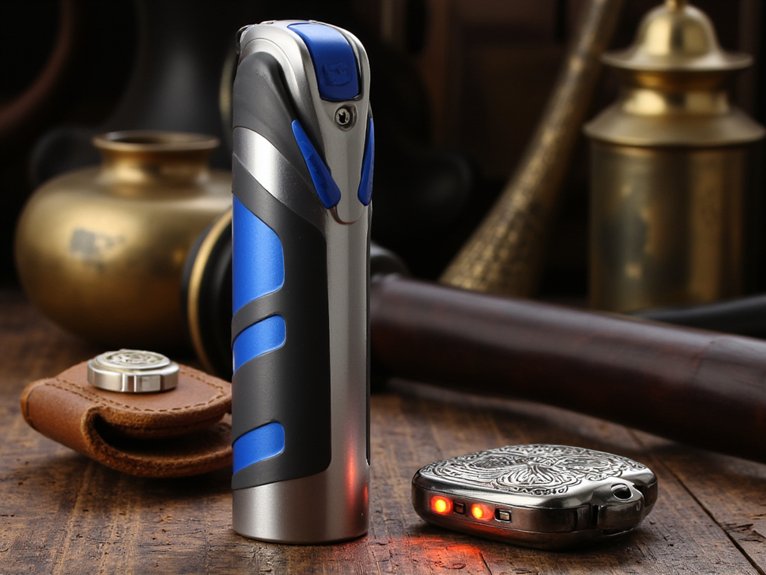
When you think about personal protection throughout human history, you’re actually exploring one of mankind’s oldest and most persistent concerns. From simple sticks and stones to elaborate systems of martial arts, your ancestors developed ingenious ways to stay safe.
Ancient weapons like the Egyptian khopesh or Japanese bo staff weren’t just tools—they represented cultural protection traditions passed down through generations. You’d find similar patterns across civilizations: common folk adapting farming implements for defense while elites carried specialized arms.
What’s fascinating is how we’ve maintained this trajectory. Today’s pepper spray and stun guns are direct descendants of those early innovations. They’re just less lethal and more portable. You’re witnessing the latest chapter in humanity’s ongoing quest to balance effective protection with ethical considerations.

Although firearms often dominate personal defense discussions, chemical deterrents represent one of the most accessible and legally permissible protection options available today. You’ll find various spray mechanisms that deliver incapacitating compounds to create distance between you and a threat.
| Type | Range | Effects |
|---|---|---|
| Pepper Spray | 10-15 ft | Burning, temporary blindness |
| OC Gel | 15-20 ft | Same as spray, less wind drift |
| Mace | 8-12 ft | Eye/respiratory irritation |
| Foam | 6-10 ft | Sticks to skin, harder to remove |
I’ve carried a keychain OC spray for years. Trust me, the compact size doesn’t diminish effectiveness! Chemical deterrents offer remarkable stopping power without permanent injury—just remember they’re affected by wind and enclosed spaces might impact you too.

While tasers offer the advantage of immobilizing threats from up to 15 feet away, stun guns require direct contact with an assailant’s body to deliver their electrical shock. You’ll need to contemplate the practical differences between these devices—tasers deploy projectiles that can be difficult to aim under stress, whereas stun guns are simpler but force you into close-quarters confrontation. Before purchasing either option, check your local laws, as many states restrict civilian ownership of electrical weapons, with regulations varying dramatically from permissive policies to outright bans.
As electrical defense weapons have become increasingly popular alternatives to firearms, understanding the essential distinction between range and contact devices could save your life in a threatening situation. Tasers offer distance protection, while stun guns require direct contact—a critical difference when seconds matter.
I’ve seen both in action, and here’s what you should know:
Despite their effectiveness as self-defense tools, Tasers and stun guns aren’t universally legal across the United States. Before purchasing, you’ll need to check your local laws—legal restrictions vary dramatically by state and even by city. What’s perfectly legal in Arizona might land you in serious trouble in New York.
| State | Taser Status | Notable Restrictions |
|---|---|---|
| California | Restricted | Background check required |
| New York | Heavily Restricted | Nearly banned in NYC |
| Texas | Legal | No felons may possess |
| Hawaii | Banned | Complete prohibition |
| Florida | Legal | No restrictions for adults |

When considering your self-defense options beyond firearms, impact weapons represent an important middle ground that shouldn’t be overlooked. Batons and kubotans offer significant stopping power without the lethality of guns, but they come with their own set of legal restrictions that vary dramatically by location.

You’ve likely heard the saying “the best self-defense tool is the one you have with you,” which is why non-lethal options like personal alarms and tactical flashlights deserve serious consideration. Personal alarms create an ear-piercing 130+ decibel shriek that can startle attackers and draw immediate attention to your situation, while simultaneously triggering the psychological flight response in most would-be assailants. A quality tactical flashlight serves triple duty: illuminating dark areas where threats often hide, temporarily blinding attackers with its high-lumen strobe function, and—in many models—featuring a strike bezel that transforms this everyday tool into an effective impact weapon when necessary.
Although firearms tend to dominate self-defense discussions, personal alarms offer distinct advantages that shouldn’t be overlooked. These compact devices excel at urban concealment—they’re small enough to attach to keychains or hide in pockets, yet powerful enough to emit ear-piercing sounds that can disorient attackers and attract help.
Here’s why personal alarms deserve a spot in your self-defense toolkit:
You’re not just buying a noisemaker; you’re investing in a hassle-free deterrent that works instantly.
While personal alarms create sonic deterrents, tactical flashlights transform darkness into a strategic advantage through both illumination and disorientation. You’ll find these compact tools invaluable in low-light situations where visibility becomes your ally. A quality 1000+ lumen light can temporarily blind an attacker when directed at their eyes, buying precious seconds for escape.
Master basic distraction techniques: the quick-flash method disorients without giving away your position. Modern tactical lights feature strobe settings that amplify this effect, causing momentary confusion and discomfort.
For concealment methods, consider pocket-carry or belt holsters that allow immediate access. I’ve found palm-sized models offer the best balance between power and portability. Remember, your flashlight serves dual purposes – everyday illumination that transforms into a defensive tool when needed.
The psychological impact of sound and light deterrents extends far beyond their physical properties, creating powerful cognitive disruptions that can decisively shift a confrontation in your favor. I’ve seen firsthand how these tools enhance your emotional resilience while establishing psychological deterrence against potential threats.
When properly deployed, these non-lethal options produce:
Moving through environments where traditional self-defense tools aren’t permitted doesn’t mean you’re left vulnerable. Everyday carry options have evolved beyond obvious weapons to include items that maintain complete discreet concealment while providing substantial protection. Think tactical pens that write smoothly but contain aircraft-grade aluminum bodies, or reinforced keychains that double as impact tools.
You’ll find numerous options hiding in plain sight: flashlights with strobe functions to disorient attackers, credit card-sized multitools with defensive edges, and even specially designed hair accessories with hidden striking points. The beauty of these items? They’re functional daily objects first, defensive tools second. Your most effective self-defense weapon might be something you’re already carrying—just upgraded with thoughtful engineering to serve dual purposes when needed.
Even the most ingeniously designed non-lethal tool becomes nothing more than an expensive paperweight if you can’t deploy it effectively under stress. Training matters—perhaps more than the tool itself. I’ve seen confident pepper spray owners fumble desperately when confronted, while those with proper training techniques remained composed and effective.
To maximize your non-lethal defense options:
Remember: stress degrades performance. Only regular, thoughtful practice bridges the gap between theory and application.