Physical Address
304 North Cardinal St.
Dorchester Center, MA 02124
Physical Address
304 North Cardinal St.
Dorchester Center, MA 02124

When you think about long-term food storage, rice and beans probably come to mind first. They’re the staples everyone recommends—and for good reason. But they’re just the beginning of a thorough strategy. You’ll need micronutrients, variety, and psychological satisfaction that basic staples can’t provide alone. I’ve discovered this firsthand during extended power outages when my freeze-dried berries and home-fermented vegetables transformed mundane emergency meals into something that felt almost normal. The difference between surviving and thriving often lies in what you store beyond the basics.
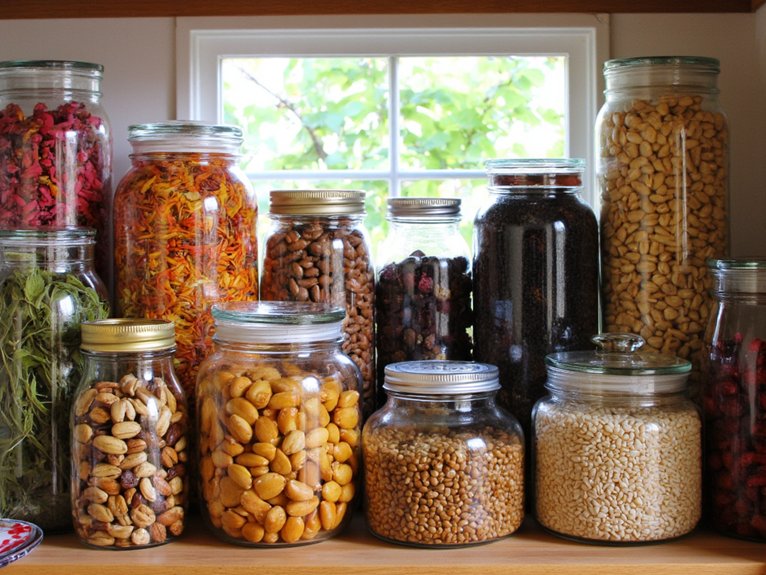
When’s the last time you thought about micronutrients while loading up your emergency food supply? Most preppers focus on calories and protein but forget the smaller nutrients that keep your body functioning *at its best*. After months on stored food, vitamin deficiencies can cause serious health issues—from night blindness (vitamin A) to bleeding gums (vitamin C).
Maintaining mineral balance is equally critical. Your body needs zinc for immune function, magnesium for muscle health, and potassium for heart rhythm. I learned this lesson during a two-week power outage when my seemingly adequate food stash left me feeling inexplicably exhausted.
Smart solutions? Include freeze-dried fruits, nutritional yeast, and multivitamin supplements in your storage. Remember, you’re not just surviving—you’re maintaining health for whatever comes next. The difference between thriving and merely existing often comes down to these *crucial* nutrients.
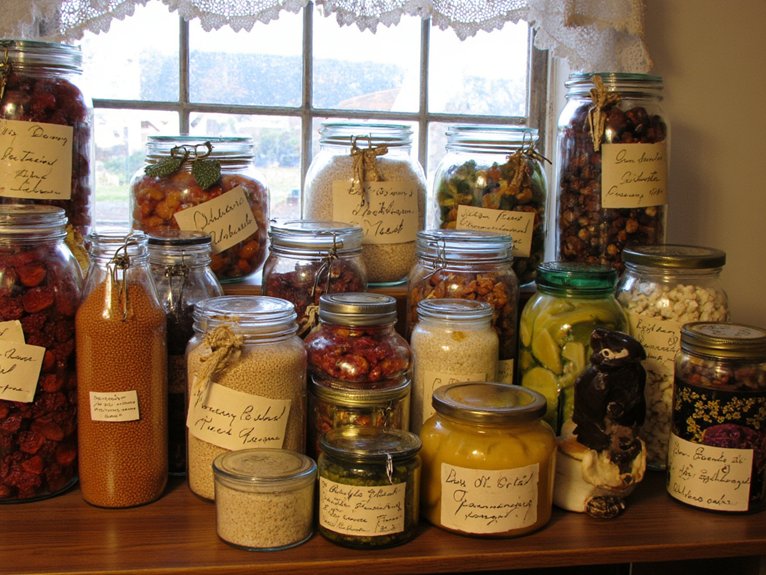
You’re about to rediscover what your great-grandparents knew instinctively: preservation techniques that span continents and centuries. From Korean kimchi to German sauerkraut, fermentation has been humanity’s refrigerator for millennia, using nothing more than salt, time, and beneficial bacteria to transform foods into longer-lasting, more nutritious versions of themselves. Similarly, cold smoking—the slow exposure of foods to smoke without cooking heat—connects you to ancient wisdom from Scandinavia to Appalachia, where fish, meats, and even cheeses develop complex flavors while gaining remarkable shelf stability.
How remarkably similar our ancestors were in their wisdom, despite being continents apart! When you examine fermentation history across civilizations, you’ll find striking parallels. The Korean kimchi, German sauerkraut, and Andean chicha all emerged independently yet follow similar biological principles.
These cultural practices weren’t just about survival—they were sophisticated food science. You’re fundamentally enlisting beneficial microorganisms to fight harmful ones while transforming flavors. The Japanese understood this when developing miso centuries before microscopes existed! What’s fascinating is how each culture developed specific vessels for their ferments: Korean onggi pots, European crocks, or Chinese earthenware.
Today’s refrigeration has made us forget these techniques, but they’re experiencing a renaissance. You’ll find that mastering even one traditional fermentation method connects you to an unbroken chain of human ingenuity spanning millennia.
Cold smoking stands apart as one of humanity’s most elegant preservation methods, quietly transforming ordinary foods into extraordinary delicacies. Unlike hot smoking, you’ll keep temperatures below 85°F, allowing smoke to penetrate your food without cooking it. This ancient technique creates unmatched complexity in smoked cheeses, where the cool smoke infuses rather than melts the dairy.
For fish preservation, you’re fundamentally using smoke particles as microscopic shields against bacteria. Atlantic salmon becomes gravlax, whitefish transforms into a delicacy, and humble trout develops astonishing depth. You’ll need patience—cold smoking isn’t quick—but the results are worth it.
Your setup doesn’t need to be fancy. A simple smoke generator separated from your food chamber will work beautifully. The key is maintaining that vital low temperature while ensuring continuous, gentle smoke flow.
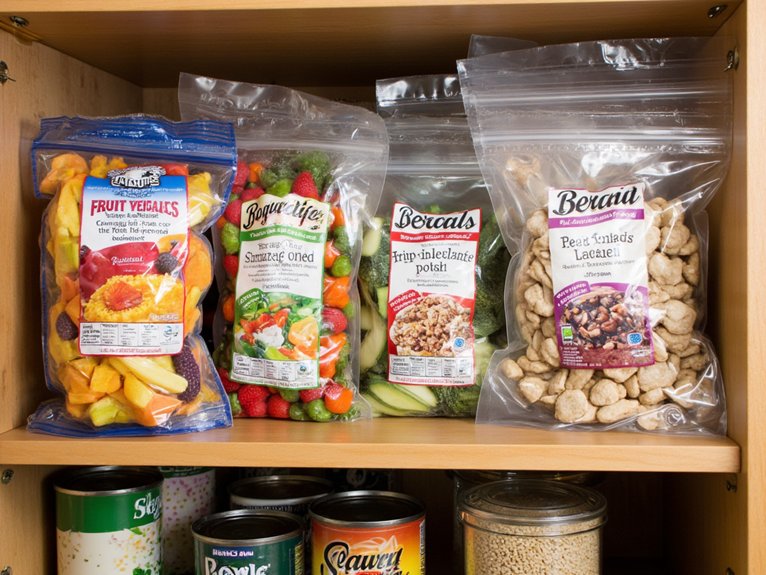
You’ll be amazed how freeze-dried foods retain up to 97% of their original nutrients, unlike other preservation methods that sacrifice nutritional value for longevity. When properly stored in oxygen-free containers, these lightweight food options can remain viable for 25-30 years—outlasting most mortgage terms and definitely your car payments! Beyond the expected emergency staples, today’s market offers surprisingly sophisticated options from strawberry yogurt bites to complete gourmet meals that would impress dinner guests who’d never suspect they came from your long-term storage pantry.
While many food preservation methods sacrifice nutritional quality over time, freeze-dried foods stand apart in their remarkable ability to retain vitamins and minerals. Research shows they preserve up to 97% of the original vitamin stability compared to canning’s mere 40%. You’re not just storing calories—you’re banking future health.
The science behind this mineral preservation is fascinating. When food freezes rapidly and water sublimates directly from ice to vapor, cellular structures remain intact. No heat damage, no oxidation deterioration. That bright orange in your freeze-dried carrots? It’s not just color—it’s beta-carotene waiting for you years later.
Compare this to dehydration, which typically destroys water-soluble vitamins. Your freeze-dried strawberries will deliver vitamin C that would’ve vanished in traditionally dried versions—a nutritional insurance policy during extended emergencies.
The exceptional nutrient preservation of freeze-dried foods pairs perfectly with their most remarkable feature: longevity that stretches far beyond conventional storage methods. When properly sealed in quality storage containers, these foods can remain viable for 25-30 years—sometimes longer. You’ll find that oxygen absorbers and mylar bags create nearly perfect food preservation environments, protecting against the enemies of shelf-stability: moisture, light, and oxygen.
Unlike canned goods that might last 5 years at best, your freeze-dried strawberries from 2020 could still brighten your grandchild’s oatmeal in 2045. The military has relied on this technology for decades, and now you can too. Remember though, storage temperature matters! Each 18°F increase above 70°F cuts shelf-life by half—so that cool basement beats your toasty attic every time.
Gone are the days when emergency food storage meant bland, repetitive meals that you’d only eat to avoid starvation. Today’s freeze-dried options include gourmet ingredients that rival fresh cuisine in taste and nutrition while offering impressive shelf life.
You’ll find luxury preservation techniques have transformed emergency food options:
I’ve personally tested dozens of these high-end options and can confirm they’re worth the investment. When crisis strikes, you’ll appreciate having culinary variety that satisfies both nutritional needs and psychological comfort—because sometimes, a proper meal is exactly what you need during challenging times.
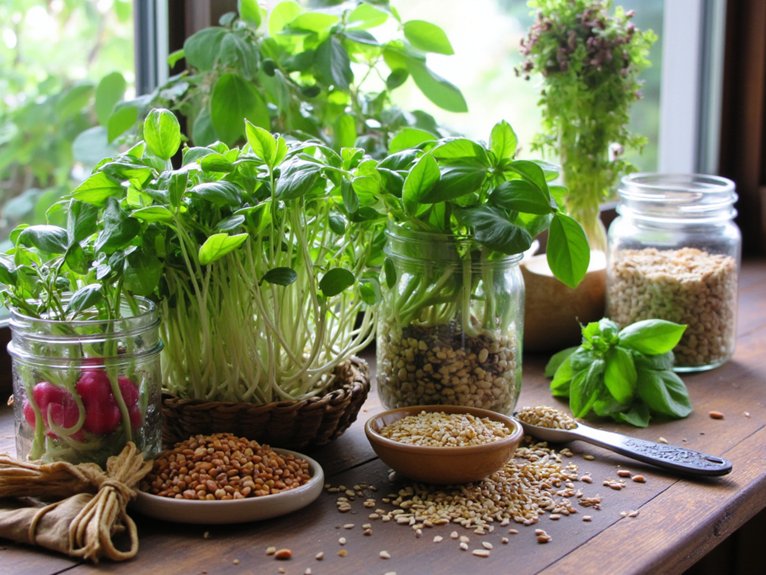
Beyond canned goods and dehydrated foods, you’ll find that sprouting and microgreens offer a remarkable way to introduce living nutrients into your long-term food storage plan. Seed sprouting requires minimal equipment—just jars, screens, and quality seeds that’ll transform into vitamin powerhouses within days. Alfalfa, mung beans, and lentils are particularly forgiving for beginners.
Microgreen cultivation takes this concept further, producing miniature versions of full-grown vegetables with concentrated nutrition. All you need is a shallow tray, soil medium, and proper seeds. These living foods provide vital fresh elements when traditional produce isn’t available.
The beauty of this approach? You’re fundamentally storing potential rather than finished products. One pound of sprouting seeds yields approximately six pounds of fresh, enzyme-rich food—an impressive multiplication of your storage investment.
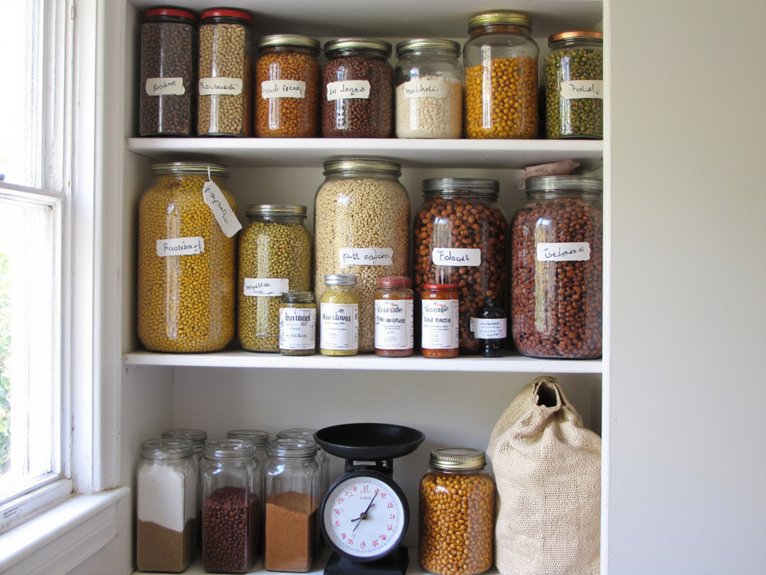
While establishing your stockpile represents an essential first step, maintaining its freshness through proper rotation creates the foundation for truly sustainable food security. Effective stockpile organization isn’t just about neat shelves—it’s about creating systems that naturally facilitate the “first in, first out” principle. Your expiration monitoring should become second nature, not a tedious chore that gets postponed until you find unwelcome surprises.
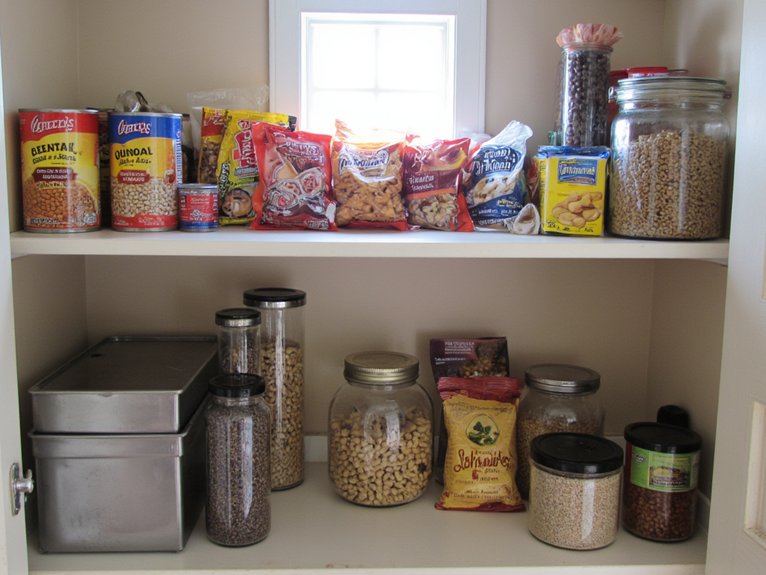
When dietary restrictions intersect with emergency preparedness, you’re facing a double challenge that requires strategic planning beyond conventional stockpiling advice. Don’t let celiac disease or ethical food choices leave you vulnerable during crises.
For gluten-free options, stockpile certified quinoa, amaranth, and buckwheat—all shelf-stable alternatives to wheat. Remember that cross-contamination matters even during emergencies, so store these items separately. Keep dedicated gluten-free pasta sealed in Mylar bags with oxygen absorbers.
Vegan substitutions require careful nutritional planning. TVP (textured vegetable protein) provides complete proteins and lasts 15-20 years when properly stored—much longer than those beans you’ve been hoarding! Nutritional yeast, a B12 powerhouse, should be vacuum-sealed and kept cool. Your body won’t care about the apocalypse when it needs nutrients.
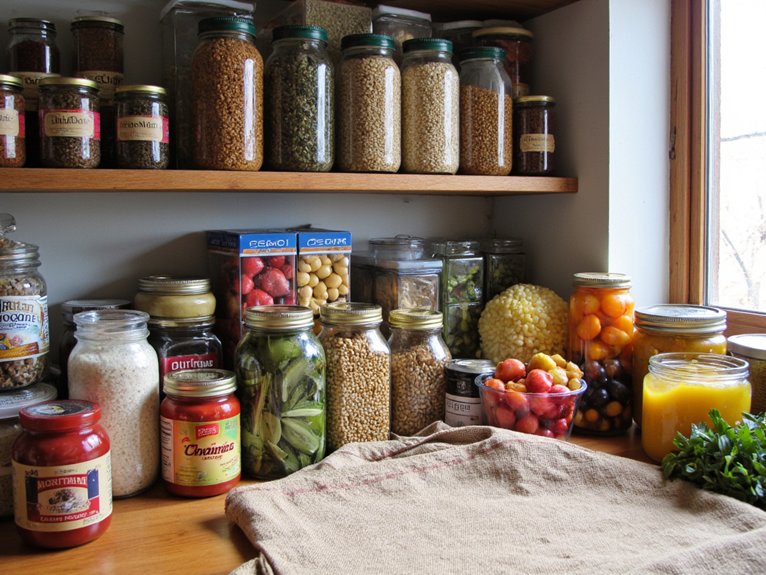
The true art of emergency food preparation lies not in merely collecting ingredients but in understanding how they transform into satisfying meals under pressure. Your meal planning strategy should extend beyond the obvious combinations to create variety that sustains both nutrition and morale. When pairing ingredients, think in terms of complete nutritional profiles rather than just caloric value.
You’ll find that ingredient pairing becomes intuitive with practice. Soon you’ll spot opportunities for creativity where others see only survival food—turning mundane staples into memorable meals during challenging times.
You’ll need 1 gallon per person per day for drinking and sanitation. Don’t forget water purification options in your hydration planning for unexpected shortages or contamination.
You’ll want food-grade plastic containers or glass jars with airtight seals. Mason jars, mylar bags, and #2 HDPE buckets are excellent choices for keeping your food safe long-term.
EMPs won’t damage your food directly, but electromagnetic disruption can disable refrigeration and electronic food preservation methods. You’ll want manual tools and non-electric preservation techniques as backup systems.
You shouldn’t store prescription medications with food. Most pharmaceuticals have specific storage requirements and limited shelf life. Keep your medications separate, monitoring their expiration dates for proper effectiveness.
For your bug-out bag, you’ll want high calorie foods that won’t weigh you down. Pack nut butters, dried fruits, energy bars, jerky, and trail mix as lightweight options with excellent calorie-to-weight ratios.