Physical Address
304 North Cardinal St.
Dorchester Center, MA 02124
Physical Address
304 North Cardinal St.
Dorchester Center, MA 02124

You’re probably wondering what makes a bug out bag truly “ultimate” when everyone seems to have their own version. I’ve tested dozens of configurations over years of emergency preparedness training, and there’s a critical balance between thoroughness and practicality that most lists miss. The difference between comfort and catastrophe often comes down to what you’ve forgotten—or worse, what you’ve included that becomes dead weight when minutes count.
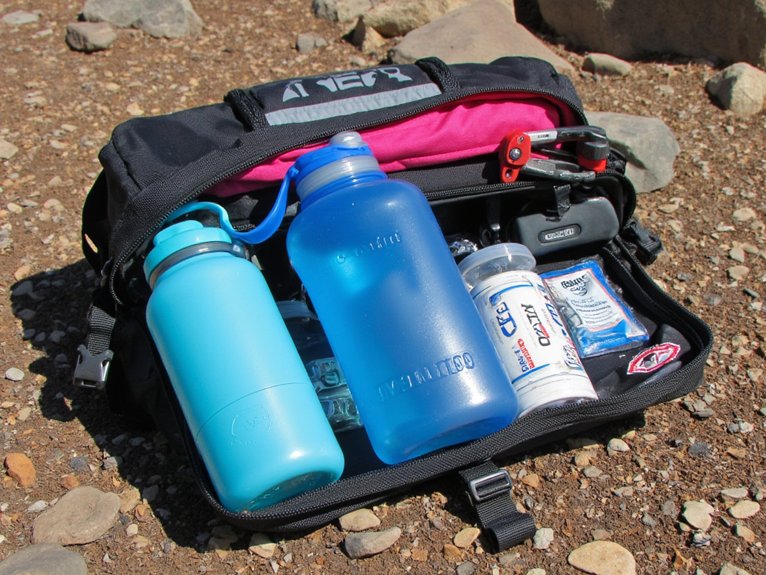
When disaster strikes, your ability to access clean water will determine your survival more than any other factor in your bug out situation. Pack at least three liters per person per day, stored in durable containers that won’t leak or puncture when jostled.
Don’t rely on finding water sources—but be prepared if you do. Include multiple water purification methods: tablets for speed, a quality filter for efficiency (LifeStraw or Sawyer Mini are my go-tos), and know-how to boil when all else fails. Those tiny tablets may look unimpressive, but they’re hydration heroes in disguise!
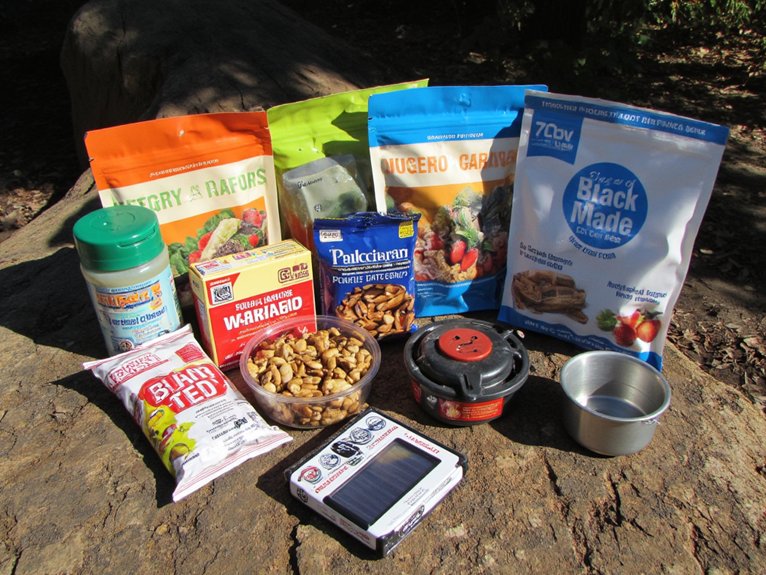
While water keeps you alive, food provides the energy you’ll need to handle the stress and physical demands of an emergency situation. Pack calorie-dense, non-perishable items that require minimal preparation—think protein bars, jerky, nuts, and freeze-dried meals.
Don’t forget a portable cooking setup! A small stainless steel pot and compact stove can transform basic ingredients into hot, morale-boosting meals. I’ve found that even heating water for freeze-dried food makes a psychological difference during stressful situations.
Consider nutritional supplements like multivitamins or electrolyte powders to maintain ideal function when your diet is limited. These tiny additions weigh almost nothing but can prevent deficiencies that affect decision-making and endurance.
Remember: in a 72-hour scenario, calories matter more than gourmet appeal. You’re fueling your survival, not hosting a dinner party.
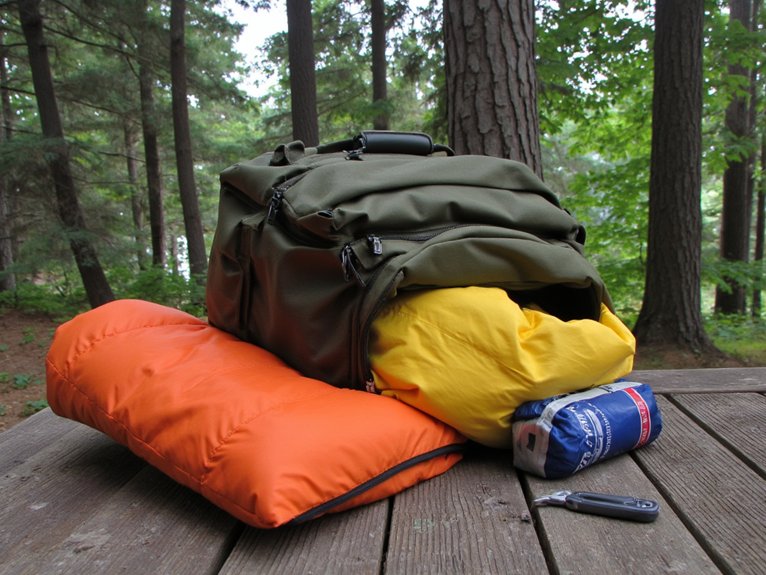
Since exposure to harsh weather can kill you faster than hunger, your bug out bag must include reliable shelter options. Pack a lightweight tarp (at least 8’x10′), four bungee cords, and 50 feet of paracord—this combo weighs little but creates multiple shelter configurations. I’ve used mine in downpours that would’ve soaked standard camping tents!
Your weather resistant gear should include a compact emergency bivvy (those silver space blanket sleeping bags), which reflects 90% of body heat while weighing under 4 ounces. Smart, right? Add four heavy-duty aluminum tent stakes and a folding entrenching tool for site preparation. If space allows, a small hammock gives you options when ground conditions aren’t ideal. Remember: your shelter materials should work in rain, wind, and cold—the unholy trinity of wilderness discomfort.
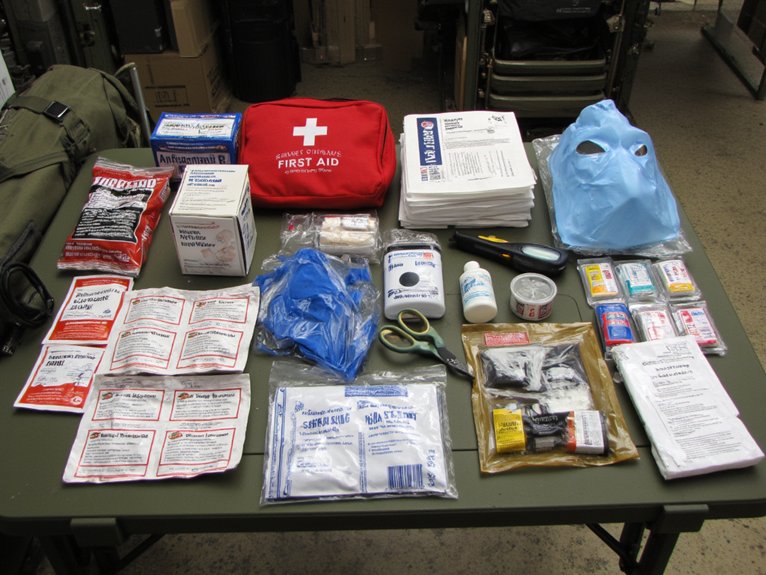
Because your survival could depend on treating injuries before they become life-threatening, a thorough first aid kit forms the backbone of your medical preparedness. Don’t skimp here—quality medical supplies can mean the difference between a minor setback and a catastrophe.
Your first aid kit should include the obvious bandages and antiseptics, but don’t forget prescription medications (a three-day supply minimum), pain relievers, and trauma supplies like QuikClot. I’ve learned from experience that tweezers and splinter removers are worth their weight in gold when you’re miles from civilization.
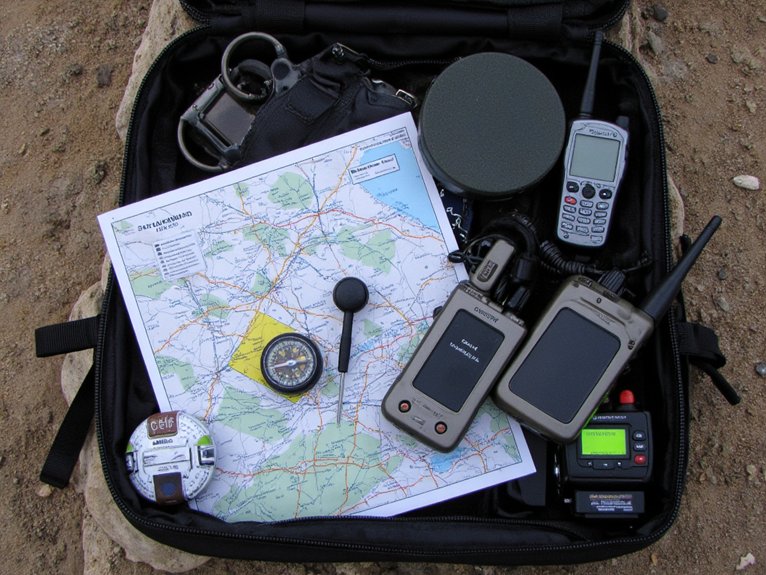
When you’re lost in unfamiliar terrain, having proper navigation tools can mean the difference between finding safety and wandering in circles. You’ll need both digital tools (GPS devices, smartphone apps with offline maps) and analog backups (compass, detailed topographic maps, signal mirror), since electronics can fail when you need them most. I’ve learned the hard way that battery-powered devices are fantastic until they’re not, which is why I always recommend practicing with that trusty compass before your life depends on it.
Even in today’s hyper-connected world, you’ll find yourself utterly lost without proper navigation tools once disaster strikes and cell networks go down. That’s why mastering basic compass skills is non-negotiable—it’s the ancient technology that never needs charging. Learn to take bearings and triangulate your position using landmarks; you’ll thank yourself later when you’re orienting through unfamiliar terrain.
For those who prefer modern solutions, GPS devices with downloadable offline maps offer remarkable precision. Just remember, electronics fail (usually at the worst possible moment), so pack extra batteries or a solar charger. The sweet spot? Carry both. A quality compass weighs practically nothing, while your GPS device provides detailed topographical information. When your survival depends on knowing exactly where you’re headed, redundancy isn’t paranoia—it’s preparation.
Although technology has dramatically transformed our approach to survival preparedness, the digital versus analog debate remains one of the most essential considerations for your bug out bag.
Digital tools offer incredible functionality—GPS devices pinpoint your location within feet, smartphones store thousands of survival guides, and solar chargers keep it all running. But they’re vulnerable to water, impact damage, and EMP events. Dead batteries render them useless paperweights.
Analog tools shine in their simplicity. Maps don’t need charging, compasses work without satellites, and physical field guides never crash. That trusty compass your grandfather used? Still works perfectly after decades.
Your best strategy: hybridize. Pack primary analog tools (map, compass, whistle) alongside carefully selected digital backups (GPS, solar charger). Remember Murphy’s Law of bug-out situations: whatever can fail, will—usually when you need it most.
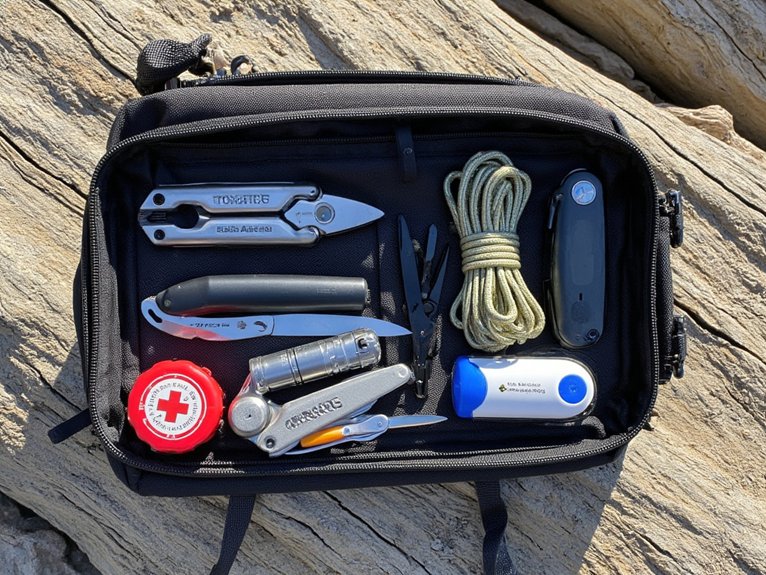
Since your bug out bag’s space and weight are limited, multi-purpose tools and equipment deserve prime real estate in your pack. Quality multi-purpose knives like Swiss Army or Leatherman models offer incredible versatility—combining blades, screwdrivers, pliers, and even can openers in one compact tool. Trust me, you’ll use these daily. Multi-use flashlights that combine illumination with features like solar charging, emergency glass breakers, or built-in compasses eliminate the need for separate items.
Consider items that serve dual functions: a bandana works as a filter, tourniquet, or head covering; metal water bottles can boil water and store it. My personal favorite? A quality paracord bracelet that unravels to provide 10+ feet of sturdy cord while being worn instead of packed. Remember, every ounce matters when you’re carrying everything on your back.
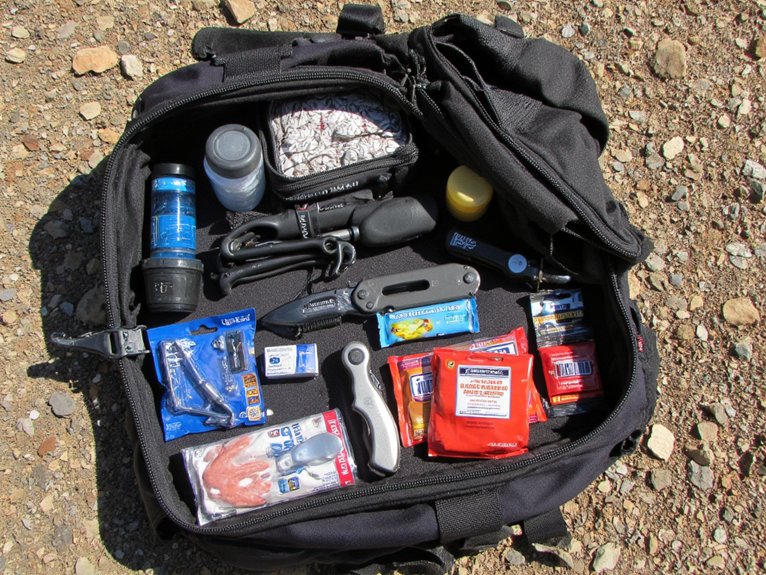
Beyond tools and equipment, your personal safety deserves serious consideration in a bug-out scenario. I’ve learned that basic self defense tactics considerably improve your chances of survival when traditional protection systems fail. Your bug-out bag should include personal safety gear that’s lightweight yet effective.
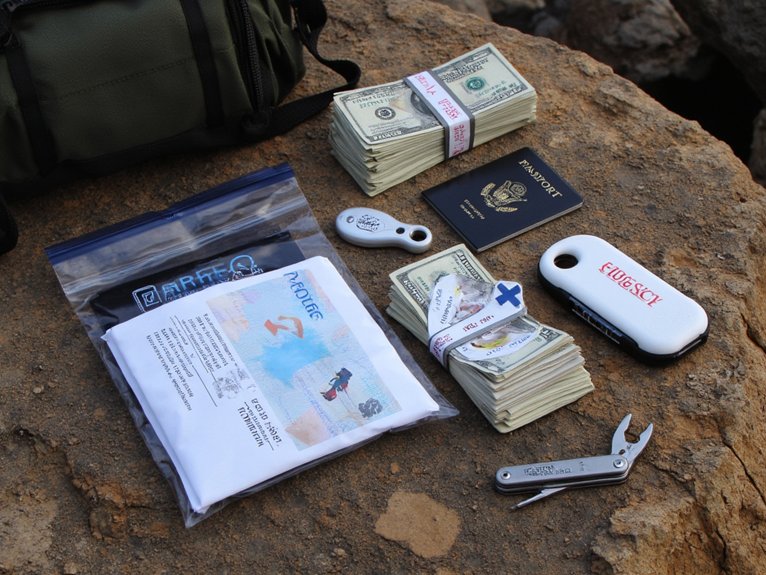
When disaster strikes, you’ll need more than just physical supplies to navigate the aftermath successfully. Your documents and financial resources are critical lifelines that many preppers overlook. Store copies of driver’s licenses, passports, birth certificates, and marriage licenses in waterproof containers—these prove who you are when systems are down.
Don’t forget insurance planning documents. Having policy numbers and agent contacts can expedite claims during recovery. A USB drive with digital backups provides redundancy that might save you weeks of bureaucratic headaches.
Cash is king when ATMs fail. Pack $500 in small bills and some silver coins for bartering. Legal documentation like property deeds, wills, and medical directives might seem unnecessary for 72 hours, but they’re irreplaceable if your home becomes inaccessible. Remember, it’s always easier to have it and not need it.
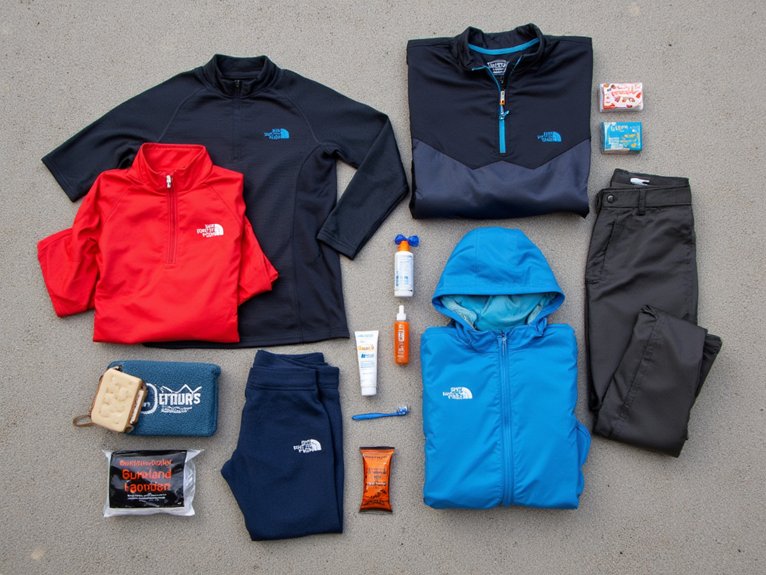
While your physical survival tools and documents provide essential security, your clothing and personal hygiene items are what keep you functional and healthy during an emergency situation. Pack clothing layers appropriate for your climate—I’ve learned the hard way that cotton kills in wet conditions. Instead, opt for moisture-wicking base layers, insulating mid-layers, and waterproof outer shells. Your personal hygiene kit doesn’t need to be elaborate, just functional.
Your bug out bag should weigh 20-25% of your body weight for efficient weight management. Focus on backpack ergonomics by distributing heavy items centrally and close to your back for comfortable carrying.
Yes, older children can carry lightweight bug out bags appropriate for their size and strength. You’ll need to prioritize child safety by ensuring the bag weight doesn’t exceed 10-15% of their body weight.
You should rotate your food supplies every 6-12 months and check water purification items annually. Make it part of your regular maintenance routine to guarantee everything’s fresh when you need it.
Store your bug out bag in a cool, dry place that’s easily accessible during emergencies. You’ll want to contemplate multiple storage options while balancing accessibility considerations against theft risk and climate control needs.
You’ll want to tailor your bag for your region’s specific hazards. Consider customization options based on local threats—whether it’s hurricanes, wildfires, or blizzards that you’re most likely to face.