Physical Address
304 North Cardinal St.
Dorchester Center, MA 02124
Physical Address
304 North Cardinal St.
Dorchester Center, MA 02124

You’ll never forget your first month living off the grid. It’s a rollercoaster of triumphant self-sufficiency one moment and complete bewilderment the next. Those initial thirty days transform theoretical knowledge into practical skills—sometimes the hard way. Your smartphone battery dies, the water pump stops working, or you realize you’ve miscalculated your food supplies. These aren’t failures; they’re your crash course in resilience. What happens when that inevitable first storm hits your solar setup?
While many people romanticize the idea of living off-grid, your first month away from modern utilities will likely deliver a sobering reality check that no YouTube video or Instagram post prepared you for. Mental preparedness isn’t optional—it’s essential. You’ll face unexpected challenges: batteries that drain faster than anticipated, weather that disrupts your carefully planned systems, and the surprising emotional toll of isolation.
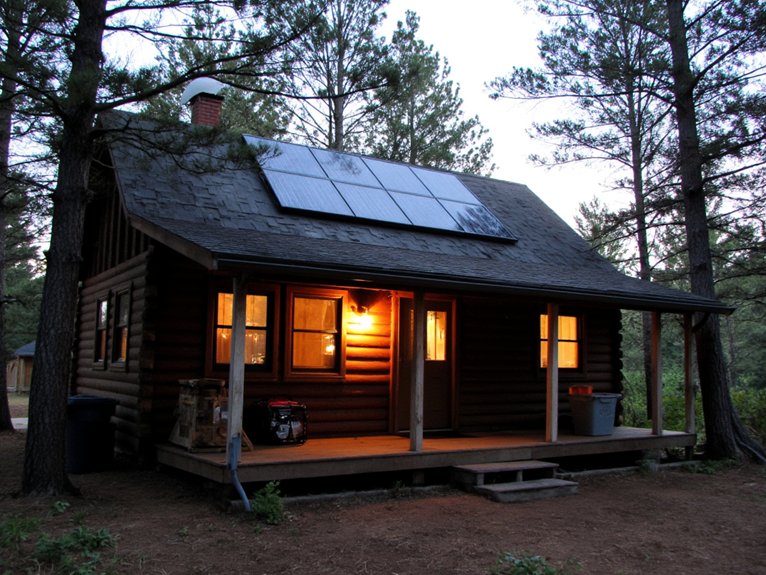
Emotional resilience becomes your most valuable resource when you’re troubleshooting a failed solar array at dusk or dealing with compost toilet mishaps. It’s not just about having backup systems; it’s about developing backup mindsets. The off-grid pioneers who thrive aren’t necessarily the most skilled technicians—they’re the ones who can laugh when things go sideways, adapt quickly, and find calm in chaos.
Your first power outage will reveal the true resilience of your off-grid setup, often at the least convenient moment. When systems fail—and they will—you’ll need to activate your Energy Hierarchy Map, prioritizing essential functions like refrigeration, heating, or communication based on your immediate needs. This map isn’t just a contingency plan, it’s your roadmap through the darkness, showing which backup systems to engage first and helping you manage limited resources until your primary power system comes back online.
Despite your meticulous planning, systems will inevitably fail when you’re living off-grid—it’s not a matter of if, but when. Your first major failure might be wildlife disturbances disrupting your crop irrigation, or perhaps your solar inverter deciding to quit during a cloudy week. Don’t panic. These moments test your preparation and adaptability.
| Failure Type | Common Causes | Quick Solutions |
|---|---|---|
| Power System | Low battery, inverter issues | Use backup generator, reduce usage |
| Water Supply | Pump failure, drought | Manual collection, stored reserves |
| Food Storage | Refrigeration loss, pests | Preserve immediately, use dry goods |
Keep contingency plans ready for each system. When my well pump failed, I had rainwater barrels that saved our vegetables. Remember, each failure makes your setup more resilient—they’re learning opportunities, not disasters.
When the first power outage strikes your off-grid homestead, it’ll quickly reveal how well you’ve planned your energy hierarchy. This isn’t the time to discover your solar panels aren’t angled properly or your wind turbines can’t handle the local breeze patterns. You need a clear map of what powers what, and when.
Start by documenting your primary, secondary, and tertiary power sources. Your solar array might lead, with wind turbines backing up cloudy days, and a generator as last resort. Then, prioritize your loads: refrigeration first, water pumping second, followed by communications and lighting. The less essential stuff (entertainment center, anyone?) drops to the bottom.
Trust me, you’ll appreciate having this hierarchy when you’re troubleshooting by headlamp at 2 AM, wondering why your batteries drained so quickly!
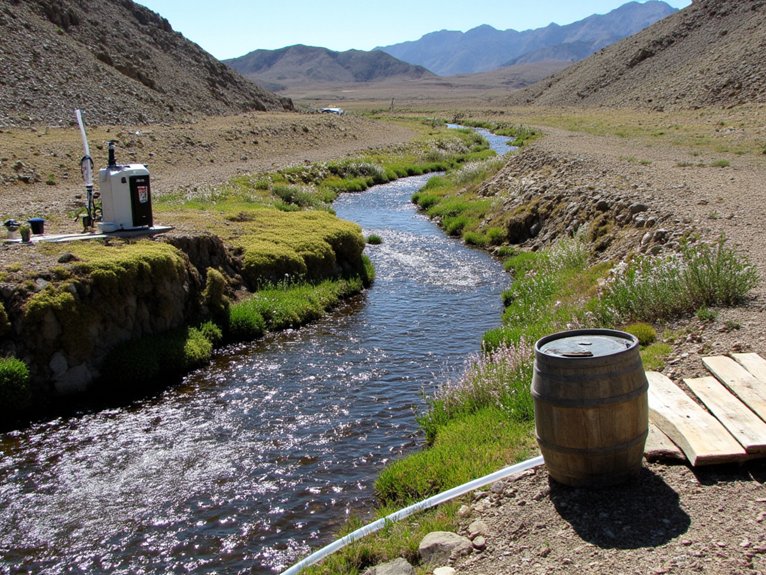
Living off-grid quickly reveals that water isn’t just a resource, it’s life itself. Those first thirty days will transform your relationship with every drop. You’ll learn to calculate exactly how much you need for drinking, cooking, and basic hygiene—often less than you’d think. Rainwater harvesting becomes your new obsession as you position containers under every possible collection point.
Your water filtration system will become your most prized possession. Trust me, nothing beats the satisfaction of turning questionable pond water into something crystal clear and safe to drink. You’ll develop a sixth sense for weather patterns, checking your barrels obsessively after even the lightest drizzle. Remember: in your new life, a five-minute shower is a luxury and dishwashing becomes an art form of efficiency.

As your microwave collects dust in storage, you’ll quickly discover that off-grid cooking demands both creativity and patience. Those first weeks will teach you that meal prep takes considerably longer—plan accordingly! A propane camp stove offers reliability, but don’t overlook solar cooking options that harness free energy on sunny days.
Your outdoor meal prep area becomes command central. Position it near your water source but away from sleeping quarters to minimize critter visits. Cast iron becomes your best friend; it’s virtually indestructible and retains heat brilliantly. One-pot meals will save you precious resources while maximizing flavors.

When you’re living off-grid, your sleep schedule naturally shifts to match the sun’s rhythms—a stark contrast to your previous life governed by artificial light and alarm clocks. You’ll find your body clock resetting within days, as melatonin production syncs with sunset and cortisol rises with the dawn, creating a sleep pattern our ancestors would recognize. This sunrise-to-sunset living isn’t just about practical energy conservation; it’s about reconnecting with your biological programming, something most modern humans haven’t experienced since the invention of the lightbulb.
Once you’ve settled into your off-grid homestead, you’ll quickly notice how artificial lighting has disrupted humanity’s natural sleep patterns for generations. Your body will naturally align with daylight hours, maximizing solar efficiency while you’re awake and active. You’ll find yourself rising with the sun and winding down as it sets.
This rhythm isn’t just energy-efficient—it’s safer too. Moving around after dark requires artificial light that might attract unwanted wildlife. Safety concerns aside, there’s something profoundly satisfying about syncing with nature’s clock. Your productivity peaks during daylight, and you’ll discover a deeper, more restorative sleep at night.
After a few weeks, this pattern becomes second nature. You’ll wonder how you ever lived otherwise, with artificial lighting extending activities well past your body’s natural shutdown time.
The incredible transformation of your circadian rhythm begins almost immediately after disconnecting from the grid. Without artificial lighting disrupting your melatonin production, you’ll likely find yourself yawning as the sun sets—even if that’s 8:30 PM instead of your usual midnight bedtime.
| Time Period | Before Off-Grid | After Off-Grid |
|---|---|---|
| Morning | Alarm-dependent | Sunrise awakening |
| Mid-Day | Energy slump | Peak productivity |
| Evening | Screen time | Sunset wind-down |
| Sleep | Restless | Deep, restorative |
| Dawn | Sleeping | Early rising |
Your body’s natural rhythms sync beautifully with your new lifestyle. While charging solar power systems during daylight hours, you’ll work with nature’s clock. Similarly, rainwater harvesting becomes intuitive when you’re awake at dawn—precisely when collection tanks need checking. Trust me, your body knows this rhythm; it’s just been waiting for you to return.
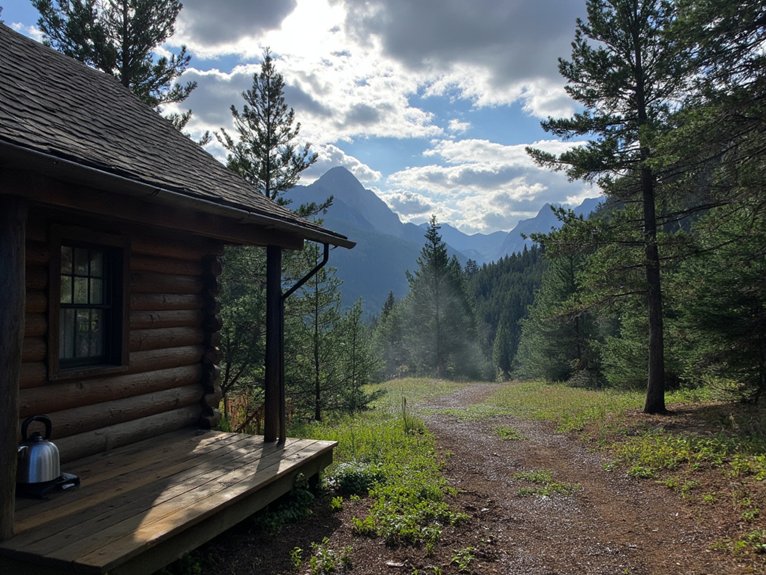
Weather’s impact on your daily routine can’t be overstated during your first month off-grid. Unlike grid life, where you’re insulated from nature’s whims, you’ll now dance to the rhythm of rain patterns and temperature fluctuations. That afternoon thunderstorm? It’s not just background noise anymore—it’s your shower being postponed and solar panels underperforming.
You’ll learn to front-load tasks during predictable weather windows. Morning dew becomes your signal to harvest vegetables before the midday heat, while sudden temperature drops might mean scrambling to protect vulnerable plants. Trust me, you’ll become a amateur meteorologist within days, studying cloud formations like they’re stock market trends. The upside? You’ll develop an intuitive connection with your environment that most modern humans have lost. Weather isn’t just small talk anymore—it’s your new boss.
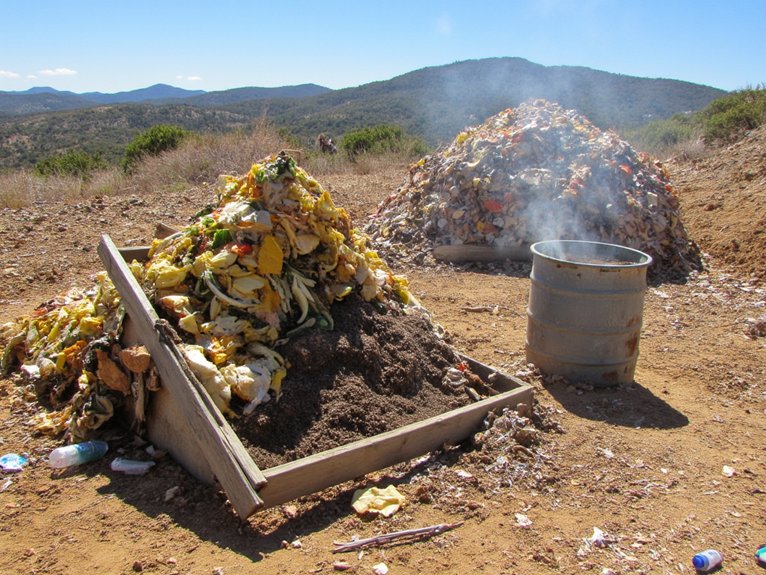
While off-grid guidebooks glorify composting toilets, you’ll spend your first week adjusting the sawdust-to-waste ratio and tackling unexpected odors that no YouTube video prepared you for. Your meticulously planned greywater system will inevitably clog during the first heavy wash day, leaving you ankle-deep in soapy water wondering why you didn’t install a larger filter. Perhaps most surprising is how quickly packaging waste accumulates when there’s no weekly trash pickup—those biodegradable food wrappers, broken tool packaging, and miscellaneous plastic suddenly become your problem to store, haul, or repurpose.
How exactly did I go from modern plumbing to obsessing over my poop-to-sawdust ratio? The composting toilet learning curve is steeper than you’d imagine. Within days, you’ll become surprisingly attuned to the delicate balance required for effective decomposition—a skill you never thought you’d acquire.
Proper composting techniques aren’t intuitive. You’ll spend week two adjusting your approach until finding your rhythm. By day 30, you’ll confidently explain your waste management system to visitors, who’ll be simultaneously horrified and impressed by your newfound expertise.
Despite my confidence in handling solid waste after mastering the composting toilet, I discovered that greywater presents an entirely different set of challenges. Your kitchen sink and shower water contain oils, soaps, and food particles that can quickly clog basic filtration systems.
| Greywater Issue | Emergency Fix | Prevention | Long-term Solution |
|---|---|---|---|
| Clogged pipes | Pressure flush | Install mesh filters | Add multi-stage filtration |
| Foul odors | Baking soda flush | Regular cleaning | Aerated distribution |
| System backup | Manual bailout | Reduce water use | Increase system capacity |
| Freezing lines | Heat tape | Insulation wrapping | Buried distribution loop |
When my kitchen line backed up on day 12, I learned the hard way about emergency plumbing in the wilderness. You’ll want basic tools and replacement parts on hand before greywater system failures occur, not when you’re standing ankle-deep in yesterday’s dishwater.
Before establishing my off-grid lifestyle, I’d never fully appreciated how much packaging accumulates when you’re miles from municipal garbage service. Your recycling habits need complete transformation when there’s no weekly pickup. You’ll quickly notice food wrappers, product boxes, and containers piling up faster than expected.
To manage packaging waste effectively:
When shopping, actively select items with minimal packaging. You’ll develop a new appreciation for companies using biodegradable materials, and likely change your consumption patterns permanently.
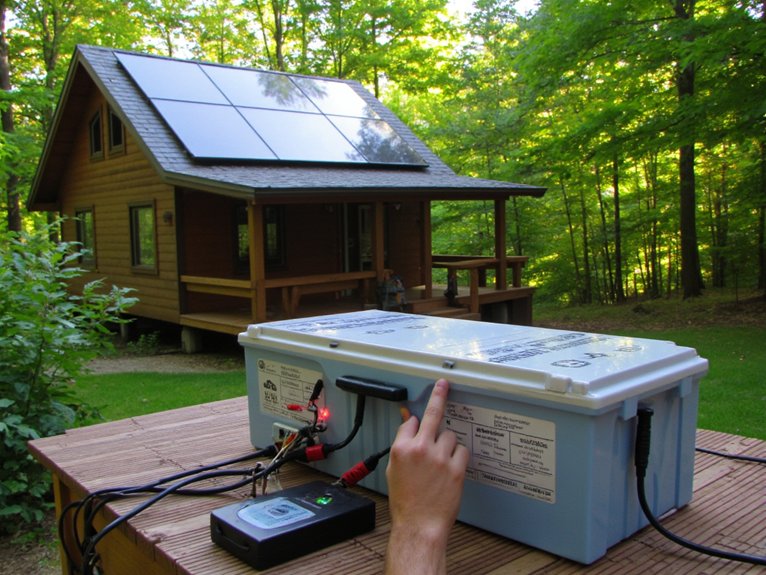
While living off-grid for a month, you’ll quickly discover that battery management becomes the heartbeat of your entire system. Those solar panels you’ve installed? They’re only as good as your ability to store and conserve their harvest. You’ll need to develop a sixth sense about your battery capacity, learning to read voltage levels like a second language.
Most newcomers make the same mistake: they drain batteries too deeply. Don’t do that! Keep usage between 50-80% of capacity to extend battery life dramatically. Create a daily energy budget and stick to it religiously. That coffee maker? It’s an energy hog. Your laptop? Not so bad.
Weather patterns will dictate your habits more than you’d expect. Three cloudy days in a row will teach you energy conservation faster than any manual ever could.
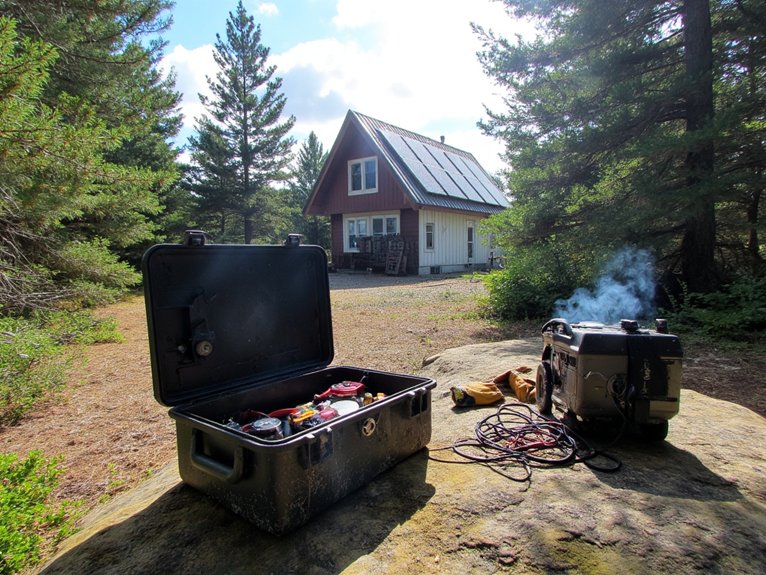
When your off-grid system unexpectedly fails, you’ll face one of the most challenging (and educational) moments of your journey. Remember that every component—from solar panels to the compost toilet—can malfunction under certain conditions. The key is maintaining calm and following a systematic approach to diagnosis.
Most failures happen during extreme weather events or after several cloudy days. Trust me, you’ll become surprisingly adept at equipment repair within weeks, often discovering simple solutions to seemingly catastrophic problems.
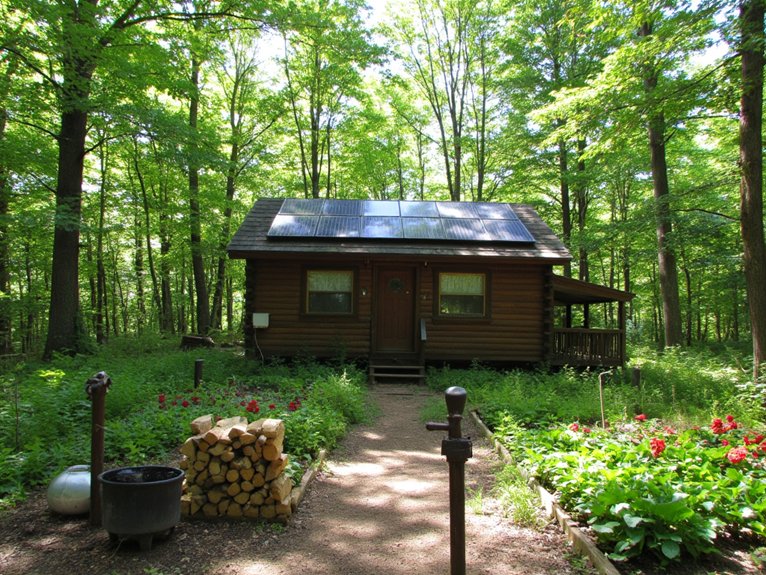
Living off-grid demands that you’re prepared with backup plans for life’s essentials, since relying on a single system for critical needs is a recipe for distress. When your primary systems fail, you’ll thank yourself for having alternatives ready to deploy.
| Essential Need | Primary System | Backup Option | Emergency Alternative |
|---|---|---|---|
| Water | Well/Catchment | Stored Supply | Community Support |
| Power | Solar Array | Generator | Battery Banks |
| Heat | Wood Stove | Propane Heater | Emergency Blankets |
| Food | Garden/Storage | Preserved Items | Wildlife Knowledge |
Remember that wildlife encounters can be both challenges and opportunities. That deer nibbling your garden is frustrating, but knowing how to hunt ethically could be a backup food source. Similarly, community support networks aren’t just for socializing—they’re your lifeline when systems fail catastrophically. Trade skills for assistance!
Beyond the physical systems that keep you comfortable off-grid, your connection to the outside world presents its own set of hurdles. Many newcomers underestimate just how isolating limited communication can be. You’ll quickly discover that cell signal varies dramatically based on terrain, weather conditions, and distance from towers. Internet access becomes precious, often requiring creative solutions like satellite systems or mesh networks.
Don’t panic—communication challenges are solvable with preparation and appropriate technology.
Although most modern households rely heavily on refrigeration, you’ll discover that keeping food fresh off-grid requires returning to time-tested preservation methods our ancestors mastered. You’ll need to embrace multiple food preservation techniques: drying herbs and fruits, smoking meats, water bath canning for acidic foods, and pressure canning for everything else.
Root cellars provide natural cooling for vegetables like potatoes and carrots, while salt-curing extends the life of meats without electricity. Don’t overlook fermentation—it’s not just delicious but transforms cabbage into sauerkraut that lasts months. For short-term storage, utilize coolers with frequently replaced ice, or construct a zeer pot (a simple evaporative cooler made from two clay pots). You’ll soon find these ancient storage techniques aren’t just functional alternatives—they often enhance flavors beyond what refrigeration can achieve.
When you’re off the grid, regulating temperature becomes both an art and a necessity that affects your comfort and energy needs. You’ll discover that passive solar heating through strategically placed windows cuts reliance on wood-burning or propane, while cooling systems can be as simple as cross-ventilation or DIY evaporative coolers. These natural temperature control methods don’t just save precious resources—they connect you to age-old practices that worked perfectly before electricity came along.
Since temperatures can drop dramatically in an off-grid setting, you’ll need reliable heating methods that don’t rely on conventional power sources. Even with solar panels powering small electric heaters, they’re insufficient for frigid nights. Your strategy should combine passive solar design with active wood heating for ideal results.
As temperatures climb during summer months, you’ll face the challenge of keeping your off-grid home comfortable without traditional air conditioning. Passive cooling techniques become your best allies during these sweaty times.
| Time of Day | Cooling Strategy |
|---|---|
| Morning | Open windows to capture cool air |
| Midday | Close windows, draw curtains/blinds |
| Afternoon | Use wet towels over doorways |
| Evening | Create cross-ventilation |
| Night | Employ ice storage for next day |
Strategic window management is vital—letting cool air in at night and keeping heat out during the day. For ice storage, freeze water jugs when your generator runs, then place them near fans to create DIY cooling. Remember that shade is your friend; plant deciduous trees on your home’s south and west sides for natural temperature regulation. Your body will adjust surprisingly quickly.
Although I’d prepared for months with checklists and YouTube tutorials, nothing quite readied me for the emotional whirlwind that began the moment I disconnected from the grid. Your mental adaptation will be tested daily as you navigate this new lifestyle. One minute you’re euphoric about generating your first watt of solar power, the next you’re questioning every life choice while manually hauling water.
When you venture off-grid, your daily hygiene routine transforms from mindless habit to deliberate practice. You’ll quickly realize that water conservation becomes paramount—navy showers (wet, off, lather, rinse) will become your new normal. Without unlimited hot water on demand, you’ll plan bathing around sunny days when your solar panels can heat water efficiently.
Bathroom habits change dramatically too. Composting toilets require a mental adjustment but offer surprising benefits: no water usage, minimal odor (when properly maintained), and valuable compost for non-food plants. Keep sawdust handy to cover deposits, and remember to separate liquids from solids.
Hand washing stations utilizing gravity-fed systems will save you gallons compared to traditional faucets. You’ll develop a newfound appreciation for wet wipes on cloudy days when hot water is scarce.
When you first arrive at your off-grid homestead, you’ll quickly realize which tools you forgot to bring—often at the most inconvenient moments. Power generation equipment tops this list, as you’ll need reliable methods to charge devices and run essential systems like water pumps or lights. You’ll also kick yourself for not packing basic building tools (hammers, saws, and drills) when something inevitably breaks or needs modification, along with proper food preservation containers that prevent your hard-earned harvest from spoiling before winter.
Despite our best planning efforts, you’ll quickly discover that power becomes your most precious resource once you’re living off-grid. Your solar panels might look impressive during installation, but cloudy days will test your system’s limits. Battery storage isn’t just about capacity—it’s about understanding discharge rates and load management.
Here’s what you’ll need beyond the basics:
How badly you’ll underestimate your tool needs during those first thirty days off-grid can’t be overstated. You’ll reach for specialized tools that stayed in your garage while wrestling with solar panels or improvising water filtration solutions.
| Essential Tools | Why You’ll Need Them |
|---|---|
| Cordless Drill Set | When power’s inconsistent, battery tools save your sanity |
| Complete Socket Set | Nothing’s standard in off-grid structures |
| Specialty Plumbing Tools | DIY water systems require constant tinkering |
Trust me, I’ve watched newcomers struggle with wire strippers made from kitchen scissors. Pack redundantly—your backup hammer will become priceless when the primary one vanishes into tall grass. And remember: the most critical tool is always the one you left behind.
Tools might save your bacon during setup, but preservation and storage equipment will determine whether you’re still smiling by day 30. Without proper food preservation methods, your supplies will spoil quickly in an off-grid setting. Trust me, nothing’s worse than watching your hard-earned harvest rot before your eyes.
Here’s what you’ll need:
After you’ve established your off-grid systems, creating a consistent maintenance schedule becomes your lifeline to uninterrupted functionality. You’ll need to track tasks weekly, monthly, and seasonally to prevent costly breakdowns. Solar maintenance might seem technical, but it’s mostly about keeping panels clean and checking connections.
| System | Frequency | Priority Tasks | Tools Needed | Time Required |
|---|---|---|---|---|
| Solar | Weekly | Clean panels, check inverter | Soft brush, multimeter | 30 minutes |
| Water | Monthly | Filter inspection, test quality | Water test kit | 45 minutes |
| Composting | Bi-weekly | Turn compost, check moisture | Pitchfork, gloves | 20 minutes |
| Generator | Monthly | Oil check, test run | Oil, funnel | 30 minutes |
| Battery Bank | Weekly | Check levels, clean terminals | Distilled water, wire brush | 25 minutes |
While mastering your off-grid systems is essential, establishing connections with like-minded neighbors and local communities might be your most valuable resource when living off the grid. During your first month, prioritize introducing yourself and learning about local traditions that may impact your off-grid lifestyle. Rural communities often have unwritten rules and seasonal rhythms worth understanding.
Even though you researched extensively before moving off-grid, seasonal changes will catch you off guard in ways you hadn’t imagined. That first spring, you’ll be amazed how suddenly bird migration patterns affect your daily routine—dawn chorus might wake you at 4:30 AM when you’re used to sleeping until 7!
Your gardening strategy will need constant tweaking. Seasonal fruit ripening schedules differ by microclimate; that wild blackberry patch might fruit two weeks earlier than regional guides suggest. Water usage spikes dramatically in summer, while winter brings unexpected battery drain as solar panels collect less energy. Those October winds that seemed romantic? They’ll knock out your compost toilet ventilation system.
Pack layered clothing for all seasons, not just winter. You’ll need them—sometimes all in the same day!
When you’re tallying up your off-grid adventure costs, you’ll need to look beyond just the solar panels and batteries that caught your eye initially. The hidden expenses—maintenance of equipment, replacement parts, and backup systems for those cloudy weeks—often surprise new off-gridders more than the upfront investment of $15,000-30,000 for a complete system. Despite these costs, your investment typically pays for itself within 7-10 years through eliminated utility bills, tax incentives, and the priceless peace of mind that comes with energy independence.
How much does it really cost to disconnect from the municipal grid? Prepare for significant upfront investments that’ll pay dividends later. Most off-gridders spend between $15,000-$40,000 on initial equipment, depending on your location and comfort requirements. Solar panels alone can run $5,000-$15,000 for a modest system that powers essential appliances, while quality water filtration systems start around $1,000.
Your major expenses will include:
Don’t skimp on quality components—I learned this lesson when my bargain batteries failed during a week-long cloudy spell. Remember, you’re not just buying equipment; you’re investing in self-sufficiency infrastructure.
While the upfront costs of equipment are substantial, the ongoing expenses of off-grid living often catch newcomers off guard. You’ll face costly surprises like generator fuel, propane refills, and battery replacements that add up quickly. Budget for these recurring items!
Water filtration maintenance isn’t cheap either. Those fancy filters need regular replacement—typically every 3-6 months depending on usage and water quality. One of the biggest hidden fees? Transportation costs. When you’re miles from civilization, every supply run burns fuel and time.
Don’t forget maintenance labor. Either you’re spending your precious hours fixing things (time is money!), or you’re paying someone else to trek out to your remote paradise. These realities don’t mean off-grid living isn’t worth it—just that proper financial planning prevents painful surprises later.
So, what’s the true financial picture of going off-grid? After your initial investment in solar panels, wind turbines, and battery storage, you’ll begin to see returns within 3-5 years. The financial benefits accumulate faster than most people realize.
Your ROI comes in three distinct forms:
While your wind turbines might underperform in certain seasons, your solar panels will likely exceed expectations during summer months. The combined systems create a financial hedge that conventional homeowners simply don’t have access to.
Despite your best efforts at self-sufficiency, certain situations during your first month off-grid demand professional intervention. Electrical issues that involve your main solar array, battery bank failures, or unexplained power drains aren’t DIY territory. You’ll save money and avoid danger by calling an expert.
Before storm season hits, consult with local specialists about storm preparedness. They’ll identify vulnerabilities in your setup that you might overlook. Keep a laminated card of emergency contacts near your system controls—include your solar installer, electrician, and plumber.
Water contamination requires immediate professional testing. Don’t guess about water safety. Similarly, if your septic system backs up or emits unusual odors, call a technician—these problems worsen quickly and can create health hazards that no YouTube tutorial can fix.
You’ll quickly discover that sharing your off-grid space with wildlife means preparing for unexpected predator visits, from curious bears checking out your compost to mountain lions tracking deer through your property. These close encounters, while nerve-wracking, can often be safely managed by making noise, maintaining distance, and having a wildlife deterrent plan ready before you need it. Not all wildlife visitors are concerning though—many species like owls hunting rodents, bats consuming mosquitoes, and snakes controlling pests actually become valuable allies in your sustainable off-grid ecosystem.
When I moved off-grid, I’d prepared for many challenges—power outages, water filtration issues, maybe even the occasional nosy neighbor—but nothing quite prepares you for discovering that your peaceful homestead sits in the middle of active wildlife corridors.
Predator threats become a daily reality when living remotely. You’ll need to quickly adapt your routines to minimize wildlife encounters, especially at dawn and dusk when most predators hunt. Trust me, nothing jolts you awake like mountain lion tracks on your porch!
Those predator signs I mentioned aren’t just academic knowledge—they’re early warning systems that might save your life. In my second week, I nearly walked between a mama bear and her cubs while checking my crop rotation plan. Trust me, you don’t want that experience!
Wildlife encounters happen more frequently than you’d think. You’ll need to develop a sixth sense—noticing when birds suddenly go quiet or deer freeze in place. These are nature’s alarms. Keep your distance, move slowly, and never run.
Remember that you’re the visitor here. Most animals are more afraid of you than you are of them. Still, maintain proper food storage protocols and carry bear spray when venturing beyond your perimeter. Some close calls are inevitable, but with proper awareness, they’ll just become great stories rather than tragedies.
While predators demand our respect and caution, nature’s beneficial residents often arrive without fanfare but contribute enormously to off-grid success. Within weeks, you’ll notice the web of beneficial species establishing around your homestead. Pollinator diversity increases as native flowers bloom—bringing bees, butterflies, and hummingbirds that’ll transform your garden’s productivity.
You’ll soon realize these creatures aren’t just visitors—they’re partners in your sustainable lifestyle, creating balance that conventional living often disrupts.
How safe are you really in your off-grid haven? Personal security in remote locations requires thoughtful planning, not paranoia. Your isolation is both protection and vulnerability—there’s no quick police response, but also fewer opportunistic threats.
| Security Layer | Day Implementation | Maintenance |
|---|---|---|
| Perimeter | Install motion lights | Weekly check |
| Structures | Reinforce doors/windows | Monthly inspection |
| Communication | Establish emergency contacts | Test equipment weekly |
| Awareness | Learn surrounding terrain | Regular exploration |
| Defense | Secure valuables | Practice protocols |
You’ll need redundant communication systems—satellite phone, ham radio, or signal boosters. Don’t advertise your location or routines to strangers. Remote safety isn’t about arsenals of weapons but creating layers of awareness and deterrence. Trust your instincts; if something feels wrong, it probably is. The wilderness demands respect, but humans remain your most unpredictable variable.
During your first month off-grid, you’ll quickly learn how tracking daily consumption becomes your new obsession – noting every watt of electricity, gallon of water, and pound of food that disappears. You’ll want to establish a detailed log showing exactly what resources you’re burning through, which helps identify surprising usage patterns (like how your morning coffee ritual consumes 15% of your daily water). This data transforms into growth-based planning, where you’ll project future needs based on seasonal changes, visiting guests, and your expanding garden or livestock operations.
After settling into your off-grid lifestyle, you’ll discover that tracking daily resource consumption isn’t just helpful—it’s essential for survival. Keep a detailed log of water, electricity, and fuel usage to identify patterns and adjust accordingly. Solar maintenance becomes intuitive when you can see exactly how many cloudy days impact your system’s performance.
This data transforms guesswork into science. You’ll quickly discover which habits are sustainable and which need modification. Within weeks, you’ll develop an almost instinctive feel for your homestead’s rhythm and capacity, making conservation second nature.
Once you’ve mastered tracking your daily resource consumption, it’s time to develop a forward-thinking approach to your homestead’s needs. Project your requirements across seasons by analyzing patterns in your first month. This foresight helps prevent resource gaps when you need them most.
Consider these growth stages for essential systems:
| Month | Solar Maintenance | Wildlife Safety | Water Storage |
|---|---|---|---|
| 1-3 | Monthly panel cleaning | Perimeter checks | 2-week reserve |
| 4-6 | Wiring inspections | Simple fencing | 3-week reserve |
| 7-12 | Battery load testing | Motion sensors | 1-month reserve |
| 12-24 | System expansion | Wildlife corridors | Rainwater system |
While my devices powered down for the first time in years, I felt a bizarre cocktail of anxiety and relief wash over me. You’ll experience this same digital withdrawal during your off-grid transition. Without constant notifications, you’ll rediscover time you never knew existed. Instead of scrolling through feeds, you’ll find yourself monitoring solar panels or mastering your composting toilet system.
Your detox will likely include:
The moment you switch to off-grid living, your body becomes your most valuable tool—one you’ll use more intensively than ever before. Expect to develop muscles you didn’t know existed as you haul water, chop wood, and climb ladders for solar maintenance. You’ll burn calories without trying!
Your clothing choices will quickly shift from fashion to function. Those designer jeans? Useless. Instead, you’ll want durable layers that can handle temperature swings and protect against the elements. Think canvas pants with reinforced knees and moisture-wicking base layers.
The first two weeks are the toughest physically—your hands will blister, your back will ache, and you’ll collapse into bed at sundown. But by day 30, you’ll notice something remarkable: tasks that once exhausted you now feel routine.
How quickly a gentle rain becomes your worst enemy when you’re living off-grid! That first unexpected downpour taught me more about home sealing than years of YouTube tutorials. You’ll discover your roof’s secret weak spots when they’re dripping onto your sleeping bag at 3 AM.
Your weatherproofing mistakes become immediate problems, not weekend projects. Trust me, you’d rather learn these lessons from reading than experience them firsthand.
Many people romanticize off-grid living as an endless peaceful retreat, but I’ve learned there’s a razor-thin line between invigorating solitude and crushing isolation. You’ll need strategies to balance both.
| Activity Type | Solitude Benefits | Isolation Challenges |
|---|---|---|
| Daily Routine | Promotes deep solitude reflection | Can become monotonous |
| Communication | Enjoy uninterrupted thinking | Miss meaningful conversation |
| Community | Freedom from social pressure | Limited support network |
During your first month, schedule periodic trips to town. Even brief interactions at the general store can refresh your social batteries. Consider satellite internet—it’s expensive but provides a lifeline when winter storms trap you for weeks. Remember, even Thoreau walked to town regularly! The goal isn’t complete disconnection, but intentional connection on your terms.
While adapting to off-grid life, you’ll discover that recognizing achievements—no matter how trivial they might seem to outsiders—becomes essential for maintaining momentum and morale. Your first successful solar planning calculation that actually meets your power needs deserves celebration. So does mastering a water purification system that consistently delivers clean drinking water.
These milestones mark your evolution from grid-dependent to self-sufficient. When you find yourself instinctively checking battery levels before running appliances, you’re no longer just surviving off-grid – you’re thriving.
As you shift beyond those initial thirty days, establishing sustainable daily patterns becomes essential to your long-term off-grid success. Think of it as switching from survival mode to thriving mode, where your systems work for you rather than you constantly working on them.
| Season | Solar Panel Focus | Rainwater Harvesting Priority |
|---|---|---|
| Spring | Clean dust/pollen | Prepare overflow systems |
| Summer | Adjust angles for max output | Monitor usage carefully |
| Winter | Snow removal protocol | Insulate collection tanks |
You’ll want to develop weekly maintenance routines rather than reactive scrambling. Check your battery levels every morning, inspect rainwater harvesting systems twice weekly, and schedule monthly deep-cleans of all filtration components. Remember, off-grid living isn’t about constant struggle—it’s about creating intelligent systems that provide reliable comfort with minimal intervention.
Off-grid insurance typically covers renewable energy systems and has specific property liability provisions for self-sufficient setups. You’ll need special riders that conventional policies don’t include for off-grid living hazards.
You’ll face varying zoning restrictions by region. Research your area’s permit processes for septic, wells, solar, and building codes before starting construction. Rural areas typically have fewer requirements.
Off-grid living can have credit impact over time if you’re not maintaining utility bills. You’ll face banking challenges like limited access to branches and potentially needing alternative financial services for daily transactions.
Children adapt remarkably to off-grid education when you provide structure. You’ll find child socialization happens naturally through homeschooling groups, co-ops, and community activities that encourage education adaptation through hands-on learning.
You’ll likely face dehydration, burns, falls, and allergic reactions off-grid. Don’t forget about wildfire preparedness with evacuation plans and waterborne illnesses from untreated water. Stock antibiotics and wound care essentials.