Physical Address
304 North Cardinal St.
Dorchester Center, MA 02124
Physical Address
304 North Cardinal St.
Dorchester Center, MA 02124

When the world goes sideways, your bug-out location isn’t just a refuge—it’s a target. You’ve invested in supplies, planned escape routes, and maybe even cached resources, but have you truly secured the perimeter? Many preppers focus on stockpiling while neglecting the defensive elements that keep unwanted visitors at bay. I’ve seen impressive retreats compromised by simple security oversights that could’ve been addressed with minimal investment. The difference between a sustainable sanctuary and a vulnerable vacation cabin often comes down to these critical protection strategies.

While even the most remote bug out location isn’t completely immune to security threats, you’ll need to carefully examine your property through the eyes of potential intruders. Start with a perimeter assessment, identifying natural lines of sight and approach routes that expose your location.
Consider how wildlife camouflage techniques can conceal structures and paths from both ground-level observation and increasingly common remote drone surveillance. Those deer trails might look innocent enough, but they’re basically nature’s highways leading straight to your doorstep!
Map your vulnerabilities systematically: water sources, cleared areas visible from distance, reflective surfaces, and noise profiles. Remember, security isn’t just about fortification—it’s about strategic invisibility. The threats you anticipate today will determine the countermeasures you implement tomorrow.
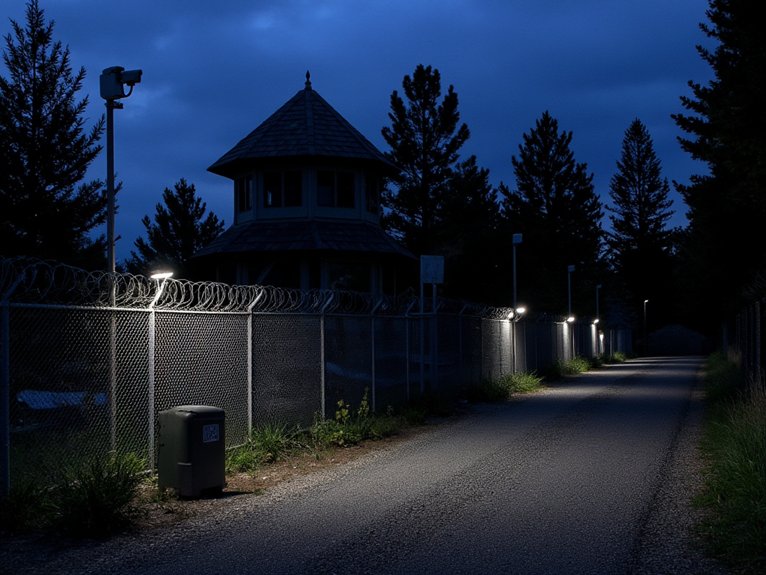
Once you’ve identified your property’s weak points, you’ll need to implement a multi-layered perimeter defense system that doesn’t rely on any single countermeasure. I’ve found that combining physical barriers with detection systems creates the most robust protection. Your perimeter lighting shouldn’t just illuminate—it should deter and reveal potential threats.
| Defense Layer | Purpose | Effectiveness | Maintenance |
|---|---|---|---|
| Motion sensors | Early warning | High when properly placed | Check monthly |
| Perimeter lighting | Deterrence & visibility | Excellent psychological deterrent | Replace bulbs quarterly |
| Physical barriers | Delay intruders | Only as strong as weakest point | Inspect after storms |
| Sensor integration | Unified awareness | Game-changing when connected | Test system weekly |
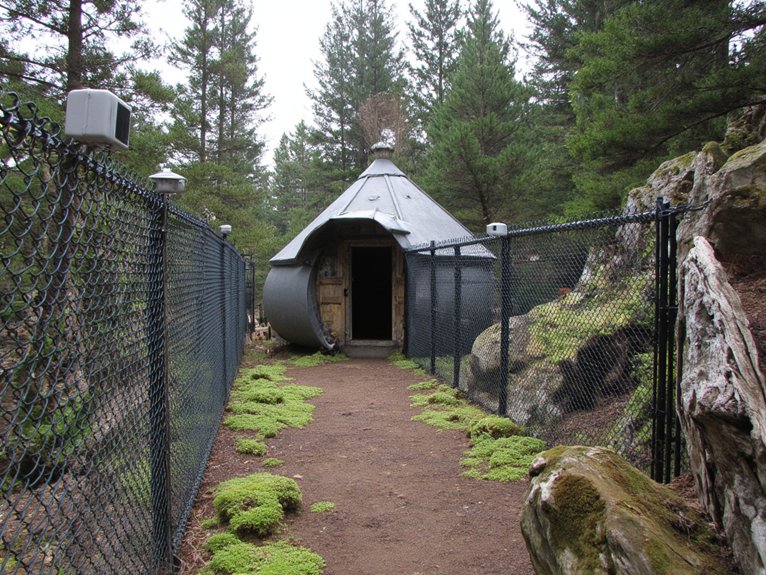
Because security systems requiring electricity won’t always be reliable at your bug out location, you’ll need detection methods that function regardless of power availability. I’ve found that simple tripwires connected to noise makers work remarkably well—they’re my go-to for perimeter security. Wildlife sensors, designed to detect body heat and movement patterns, can distinguish between animals and humans when properly calibrated. For remote monitoring without power, consider these field-tested options:
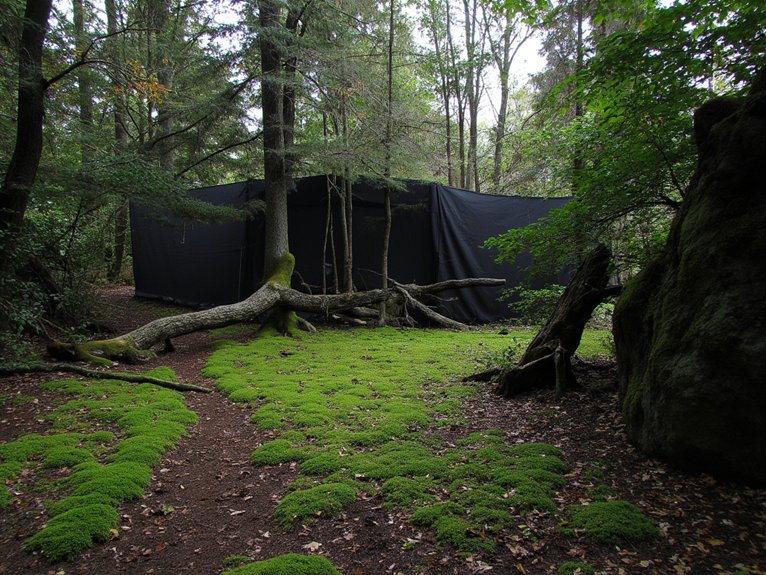
The best detection systems won’t matter if your location is discovered in the first place. Your bug out location should blend into its surroundings so naturally that someone could walk within 50 feet without noticing it. I’ve found that effective camouflage techniques involve using native vegetation, breaking up the outline of structures, and avoiding straight lines that don’t exist in nature.
Hidden entryways are your secret weapon. Consider approaches that require specific knowledge—a path that seems to dead-end but actually turns, or an entrance concealed behind natural features. Remember, even your routine activities can give you away. Smoke rises, vehicles leave tracks, and regular paths form through repeated use. The most secure locations aren’t necessarily the most fortified ones, but rather those that no one ever thinks to look for.
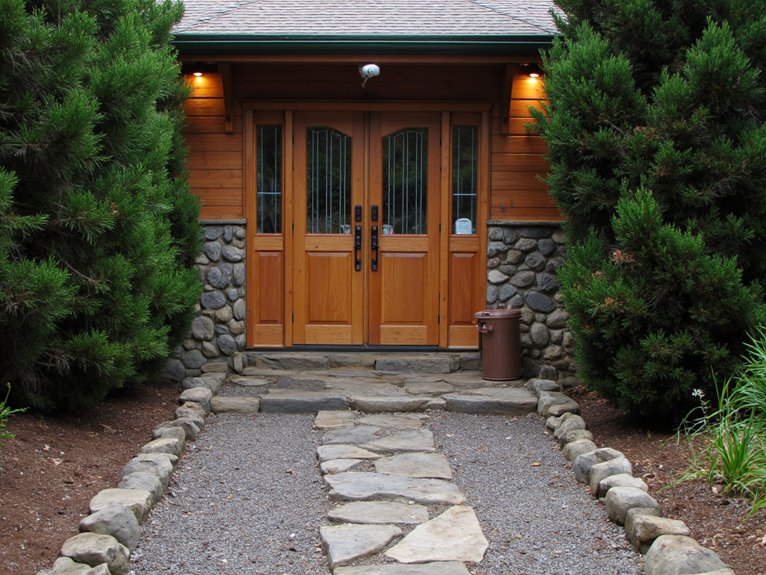
While firearms and watchful eyes protect your perimeter, an intruder’s most likely path into your bug-out location remains the humble door and window – points you’ll need to harden like a fortress. Your entry door should feature a solid core, multiple deadbolts, and reinforced strike plates with 3-inch screws that anchor directly into the framing, not just the thin door jamb. For windows, consider installing polycarbonate panels (virtually unbreakable compared to glass), security film, or sturdy window bars that can be released from inside in case of fire – creating a balanced approach that keeps intruders out while allowing you to escape if necessary.
When intruders attempt to breach your bug out location, they’ll typically target the most vulnerable entry point—your doors. Effective door reinforcement begins with installing a high-quality deadbolt that extends at least one inch into the frame. Don’t skimp on security hardware; invest in strike plates with 3-inch screws that anchor directly into the door frame’s studs. Consider adding a door reinforcement kit that distributes force across the entire frame, making kick-ins nearly impossible.
Why do intruders consistently choose windows as their second-favorite entry point? Simple—they’re literally designed as openings in your defensive perimeter. Windows offer visibility (they can see what’s worth taking) and vulnerability (glass breaks easily). Your window security strategy needs multiple layers.
Start with the basics: security film that prevents glass from shattering completely when struck. It’s not bulletproof, but it’ll slow down casual intruders. For serious breach prevention, consider polycarbonate panels or window bars—ugly but effective. Don’t forget the frames; even bulletproof glass is useless if mounted in flimsy frames.
I’ve found that thorny shrubs under first-floor windows create natural deterrents. Remember, you’re not trying to make entry impossible—just difficult enough that they’ll move on to easier targets.

Because your bug out location’s security depends heavily on staying undetected, you’ll need to master both communication protocols and counter-surveillance techniques. Encrypted messaging apps like Signal provide excellent security, but remember—digital transmissions can still be tracked. Consider incorporating covert communication methods like pre-arranged dead drops or visual signals that won’t generate electronic signatures.
Don’t underestimate low-tech solutions. Sometimes a simple mirror flash system between trusted allies beats any digital alternative, especially during grid-down scenarios.
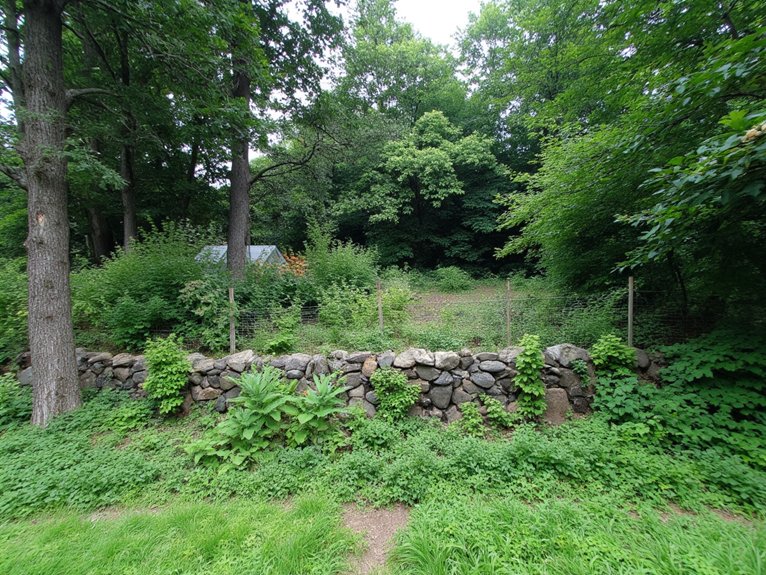
Consider maintaining wildlife corridors at the perimeter—they’ll serve dual purposes. Animals moving through will disturb potential intruders, acting as a natural alarm system. Plus, these pathways can be booby-trapped with noise-makers only you know about.
I’ve found that layering defensive plants at varying distances from structures creates multiple engagement zones without looking militarized. Remember, the best security measures are those that don’t look like security measures at all.
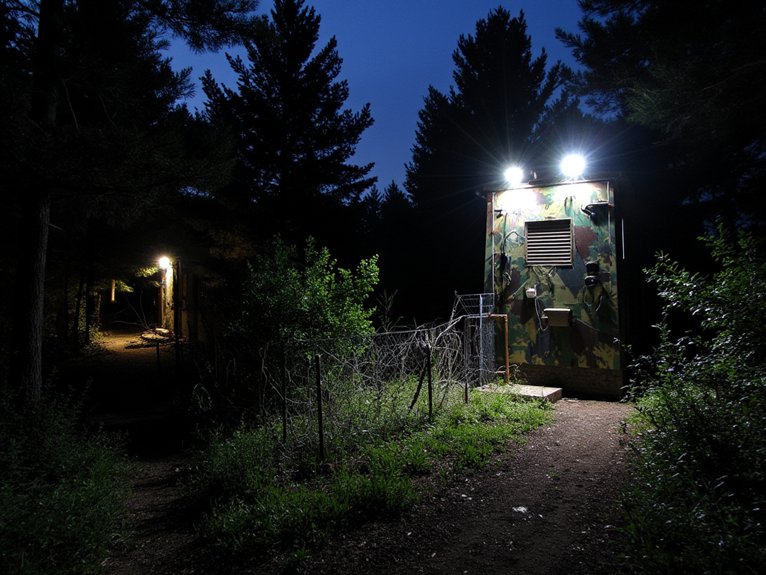
Your bug out location’s security depends on a well-designed layered defense strategy that creates multiple barriers between potential threats and your core living areas. You’ll need reliable access control systems—ranging from simple coded locks to more sophisticated motion sensors and cameras—that restrict entry while allowing quick movement for authorized individuals during emergencies. Establishing clear emergency response protocols guarantees everyone knows exactly what to do when various alarms sound, turning your theoretical security planning into practical actions that could save lives when seconds count.
Why settle for a single line of defense when layers of security can dramatically improve your bug out location’s resilience? I’ve found that strategic implementation of overlapping security measures creates a thorough barrier against threats. Your water purification systems should be located behind at least two security layers, protecting this essential resource from contamination or theft.
Wildlife monitoring serves dual purposes in your layered approach. It alerts you to normal animal patterns—and when those patterns change, potential human intrusion.
Each layer buys you time. Time equals options.
Building upon our layered defense foundation, effective access control systems represent the operational backbone of your bug out location security. These systems transform theoretical safety into practical protection through controlled entry points.
Consider implementing keypad security for your primary entrances—they’re reliable, even during power outages when backed by battery systems. For critical areas like safe rooms or supply caches, biometric access offers next-level protection that can’t be stolen or duplicated. Your fingerprints don’t get lost during midnight evacuations!
Even as perimeter systems and access controls form your defensive shell, well-rehearsed emergency response protocols constitute the beating heart of true bug out location security. I’ve seen firsthand how proper planning prevents panic when things go sideways. Your protocols should address medical preparedness with designated treatment areas and clearly marked supply locations.
Don’t overlook vehicle security—establish designated parking areas away from main structures and maintain fuel reserves. Regular drills aren’t just busywork; they’re life insurance when seconds count.
Start with casual practice sessions involving family involvement in everyday scenarios. Make emergency communication fun through role-playing games. Set achievable goals and explain why these skills are important for everyone’s safety.
Reveal your location only when allies need to know, not before. Your sharing tactics should progressively disclose information while maintaining some concealment strategies even with trusted individuals.
You’ll face legal liabilities if security measures violate local ordinances. Know your property rights, but avoid excessive force traps, unauthorized surveillance, or restricting public access on easements.
You’ll want to implement water source concealment through underground catchment systems. Use stealth water access techniques like camouflaged wells, buried collection tanks, and disguised rainwater harvesters to maintain operational security.
You’ll need discreet storage containers that prevent moisture. Vacuum-sealed bags work well. Maintain your equipment quarterly with light oil and desiccants. Don’t forget to rotate batteries and test functionality.