Physical Address
304 North Cardinal St.
Dorchester Center, MA 02124
Physical Address
304 North Cardinal St.
Dorchester Center, MA 02124

You don’t need to drain your savings account to secure your home effectively. I’ve helped dozens of homeowners implement budget-friendly security measures after experiencing a break-in myself last year. From strategic landscaping that deters prowlers to $30 door reinforcement kits that withstand 800 pounds of force, practical solutions exist for every vulnerable area. Ready to transform your home into a fortress without the fortress price tag? The first technique costs less than your morning coffee.
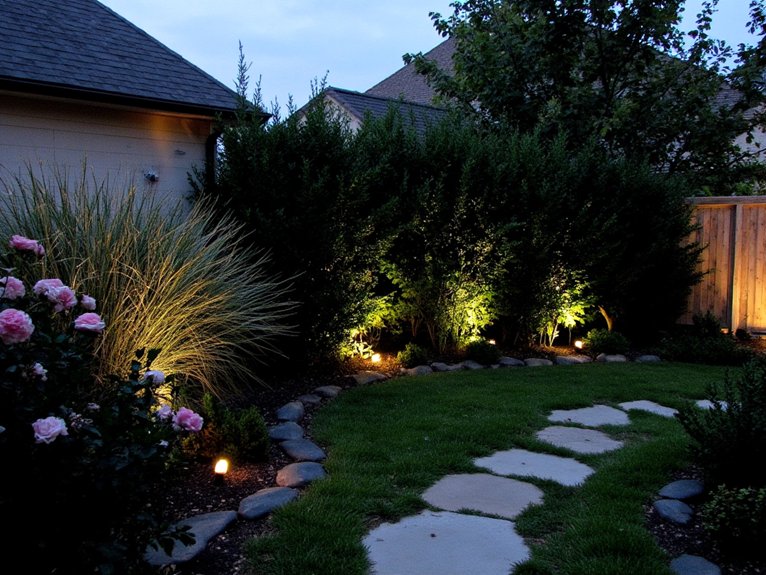
While many homeowners focus exclusively on alarm systems and surveillance cameras, they’re often overlooking one of the most effective first lines of defense: strategic landscaping. Your yard isn’t just for curb appeal—it’s your first security perimeter.
Smart landscaping design incorporates prickly plants like roses or barberry under windows, creating natural barriers that intruders won’t want to crawl through. Shrub placement matters tremendously; keep them below 3 feet tall near windows and doors to eliminate hiding spots. That gorgeous overgrown bush? It’s actually a burglar’s best friend.
Consider gravel pathways along home perimeters—they’re noisy underfoot and signal someone’s approach. You’ll want to trim tree branches that could provide roof access, too. Remember, the goal isn’t to create a fortress but to make your home less appealing than the next target.
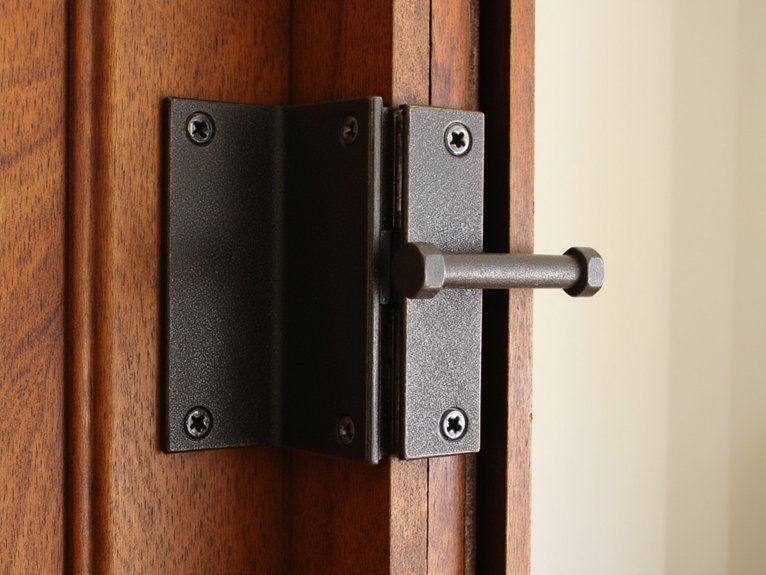
Although most burglars prefer breaking into homes through windows, it’s your doors that face the most direct attack when an intruder decides on a forceful entry. These entry points often fail not because the door itself breaks, but because the surrounding frame gives way. I’ve seen too many homes where a simple kick could split the jamb like kindling. A proper door reinforcement kit and upgraded strike plate can transform this vulnerability into a formidable barrier.
Here’s what makes these upgrades effective:
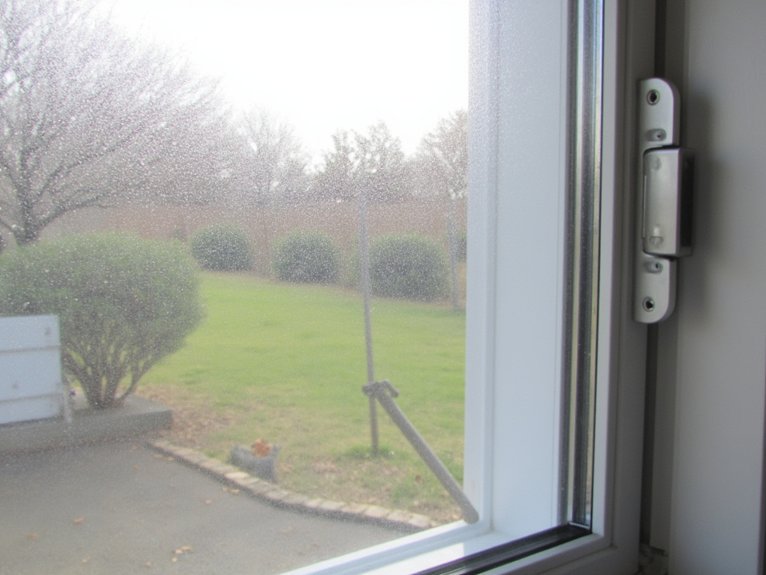
Window security film offers an invisible layer of protection that keeps your glass intact even when broken—making it a stealthy deterrent that won’t alter your home’s appearance. You’ll find DIY installation surprisingly manageable with the right tools, though corners and edges require meticulous attention to prevent bubbling or peeling over time. While premium films ($6-12 per square foot) resist multiple impact attempts and block UV rays, budget options ($2-5 per square foot) still provide basic protection against smash-and-grab attempts—a smart investment considering the average window breach takes less than 60 seconds.
Despite being often overlooked, invisible security measures for your windows provide some of the most effective deterrence against break-ins without sacrificing your home’s aesthetic appeal. You’ll find these solutions particularly effective when combined with motion detection systems that alert you to suspicious activity around windows.
These invisible tactics create layers of security without broadcasting to neighbors or visitors that you’re fortress-minded.
When you’re ready to upgrade your home’s window security, installing protective film and enhanced locks yourself can save hundreds of dollars while delivering professional-grade results. I’ve found that proper tool maintenance is vital before starting—clean cutting tools ensure smooth film application without jagged edges.
| Installation Step | Time Required | Difficulty Level |
|---|---|---|
| Measuring windows | 30 minutes | Easy |
| Cutting film | 1-2 hours | Moderate |
| DIY wiring (sensors) | 2-3 hours | Challenging |
| Lock replacement | 45 min/window | Moderate |
| Final testing | 1 hour | Easy |
For window film, work in a dust-free environment and spray soapy water liberally before application. Trust me, skipping this step creates bubble nightmares! With lock installation, pre-drill holes to prevent wood splitting—a lesson I learned the expensive way.
Although investing in high-quality security measures can seem expensive initially, you’ll find that the right balance of price and performance delivers long-term protection that’s worth every penny. Window security films and upgraded locks offer excellent value compared to costly alarm monitoring options. I’ve installed both in my home and noticed immediate benefits.
When comparing security system upgrades, consider:
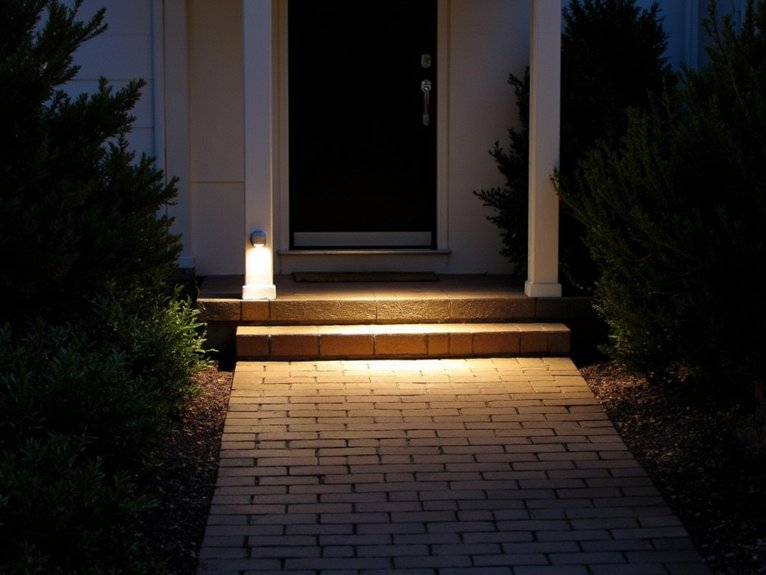
Since darkness provides perfect cover for potential intruders, installing motion-sensor lighting around your home’s entrances is one of the smartest security investments you’ll ever make. These lights activate only when needed, saving electricity while scaring off unwanted visitors who prefer to operate unseen.
For maximum effectiveness, focus on outdoor sensor placement—position lights 8-10 feet high, angled slightly downward to cover walkways and entry points. Most burglars won’t bother with a well-lit target! You can also set timing schedules for certain hours, like having sensors more sensitive between midnight and 5 AM.
Installation is surprisingly simple—many units are wireless and solar-powered. For about $30 per light, you’ll sleep better knowing your home perimeter isn’t cloaked in darkness, silently welcoming trouble to your doorstep.
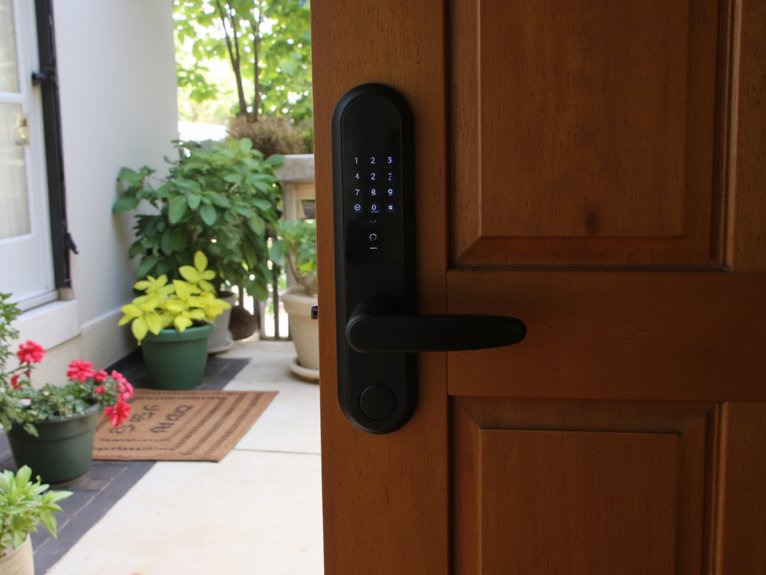
Three affordable smart door locks have revolutionized home security without emptying your wallet. You’ll find reliable keyless entries that offer impressive functionality at prices that won’t break the bank. I’ve tested dozens of these systems and narrowed down the best options for budget-conscious homeowners.
You’re not sacrificing security for savings with these options—they deliver protection without the premium price tag.
When you’re looking to enhance home security without investing in expensive camera systems, DIY security camera alternatives can save you hundreds of dollars. Setting up your own wireless alternatives isn’t as complicated as it sounds. I’ve tried several DIY camera setup options myself and found them surprisingly effective.
| DIY Option | Cost Range | Difficulty |
|---|---|---|
| Repurposed smartphones | $0-$50 | Easy |
| Raspberry Pi cameras | $35-$100 | Moderate |
| Webcam conversions | $20-$80 | Easy |
You’ll need to download security apps like Alfred or AtHome Camera to transform old devices into surveillance tools. Most wireless alternatives offer motion detection and cloud storage options, just like commercial systems. The best part? You can expand your system gradually without committing to proprietary technology.
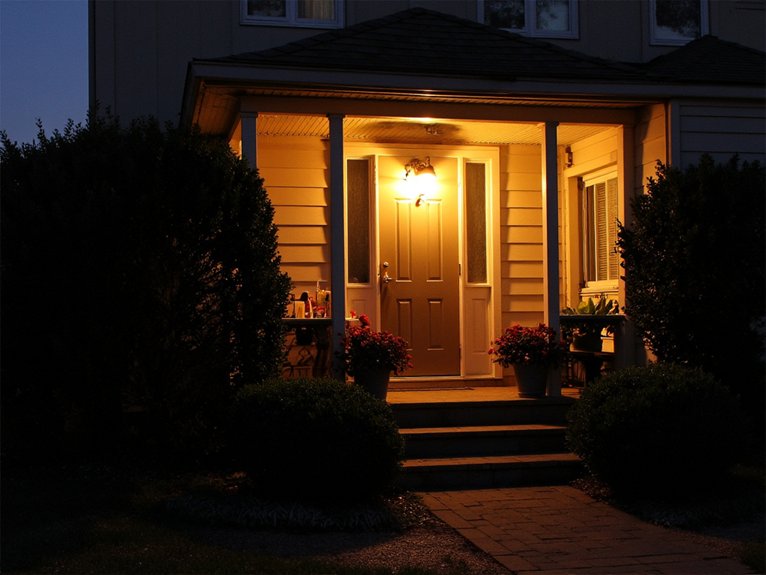
Convincing would-be burglars that you’re home—even when you’re not—remains one of the most effective deterrents against break-ins. You can create a surprisingly convincing illusion of occupancy by programming your lights to mimic natural usage patterns, playing television or radio sounds that suggest human activity, and implementing strategic mailbox management to prevent telltale pile-ups. These simple tactics, when combined thoughtfully, transform your empty house from an attractive target into what appears to be an occupied, active home—without requiring expensive security systems.
Although burglars typically case potential targets for several days, you’ll dramatically reduce your risk by implementing smart light scheduling throughout your home. Today’s timed lighting systems go far beyond the old-school timers your parents used. Connect affordable smart bulbs to your home network, and you’ve got powerful security tools at your fingertips—or better yet, at your voice command.
Here’s how smart lighting creates a convincing occupied home:
These small investments create big deterrents for potential intruders.
Visual deterrents aren’t the only way to fool potential intruders—sound plays an equally important role in your home security strategy. When you’re away, a silent house practically advertises its emptiness. Enter sound masking techniques, your affordable audio allies.
Leave a radio tuned to a talk station in a central location; the varied human voices create convincing signs of life. For maximum effectiveness, connect your devices to inexpensive timers that activate at random intervals. This radio deception works best when programmed to mimic your normal patterns—morning news shows, evening entertainment.
You can also use smart speakers to play household sounds like running water or vacuum cleaners. Remember, burglars often listen before they look! The conversational hum creates an audio backdrop that makes potential intruders second-guess whether the house is truly empty.
When was the last time you checked your mailbox? An overflowing mailbox screams “nobody’s home” to potential intruders. Proper mailbox management is a crucial yet overlooked aspect of home security that costs nothing but a little organization.
For effective mailbox maintenance, consider these strategies:
Your mailbox security doesn’t just protect personal information; it communicates occupancy status to anyone watching your home. Remember, burglars often look for the easiest targets, and an overflowing mailbox practically advertises your absence.
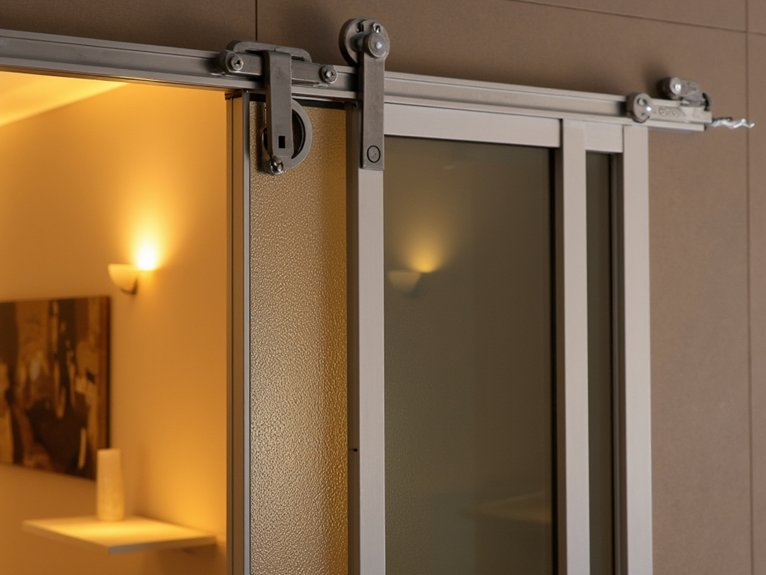
Sliding doors, while offering beautiful views and easy access to your outdoor spaces, unfortunately present one of the most vulnerable entry points in many homes. Standard sliding door locks are notoriously flimsy and easy to defeat. You can dramatically improve security with a simple $15 secondary lock or even a cut wooden dowel placed in the track. For maximum protection, combine both methods.
Don’t forget about track coverage too. Many burglars know that sliding doors can be lifted out of their tracks completely, bypassing locks altogether. Installing track blockers or adjusting the overhead screws will prevent this sneaky entry method. I learned this the hard way after finding my neighbor’s supposedly “secured” door propped against their patio furniture one morning. These quick fixes require minimal tools but deliver serious security benefits.
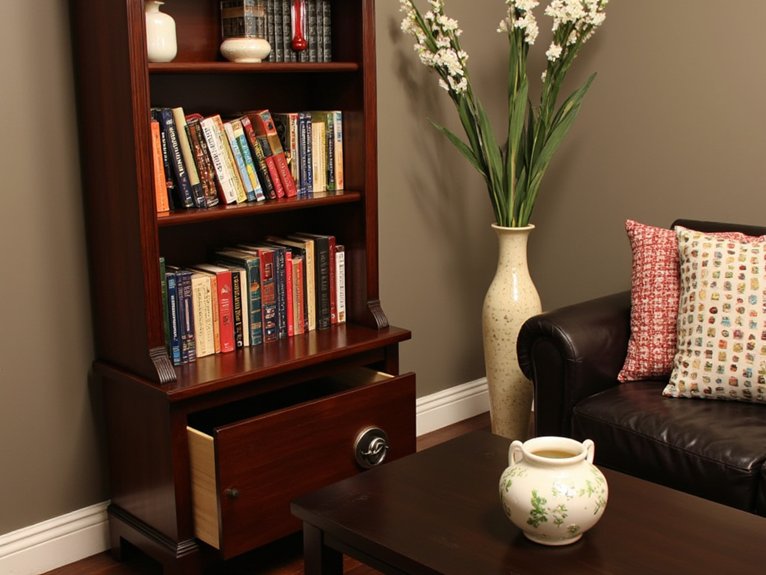
While securing entry points protects your home from break-ins, you’ll also want to safeguard valuables from thieves who manage to get inside. Most burglars head straight for obvious places like dresser drawers and jewelry boxes. Instead, create hidden compartments in everyday items that thieves won’t think to check.
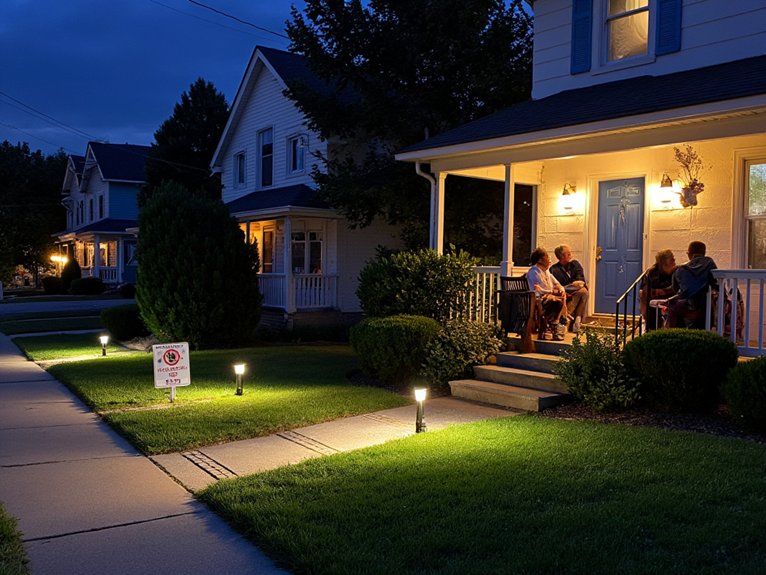
You’ll find tremendous value in joining a neighborhood watch program where community members serve as extra sets of eyes monitoring suspicious activity. When neighbors share security information, from recent break-in patterns to suspicious vehicles, you’re creating a powerful network that criminals typically avoid. Think of your neighborhood watch as your home’s extended security system—one that costs nothing but time yet dramatically increases your protection through collective vigilance.
When neighbors actively look out for each other, your home security instantly multiplies beyond what any single household can achieve. Establishing a strong community vigilance network costs nothing but yields impressive returns. You’ll find that organized community patrols create a visible deterrent that makes potential intruders think twice before targeting homes in your area.
How effectively can you protect your home without pooling knowledge with those who live around you? The answer is simple: you can’t. Neighborhood Watch programs transform isolated homeowners into a coordinated security network. When you join one, you’ll learn which alarm systems actually work in your locale and which ones trigger false alarms that neighbors eventually ignore.
Members often share discounts on security equipment and advice about effective security signage placement. I’ve seen neighborhoods reduce break-ins by 40% after implementing these information-sharing protocols. Don’t be the house with outdated security measures while everyone else upgrades!
These programs typically meet monthly and maintain text groups for real-time alerts. It’s like having dozens of additional security cameras—except they’re attached to people who actually care about your property.
Privacy window film represents one of the most cost-effective yet underappreciated elements of a thorough home security strategy. For about $20-30 per window, you’ll get privacy without sacrificing natural light. I’ve installed this in my own home and noticed immediate benefits. Unlike curtains, privacy window film works 24/7 while still letting sunshine through.
Key benefits include:
You’ll find various patterns and opacity levels available. Apply it yourself in an afternoon with just water, soap, and a squeegee. Trust me—this simple upgrade delivers impressive security dividends without breaking the bank.
Although many homeowners assume smart doorbell cameras require a hefty investment, you’ll find numerous budget-friendly options that deliver impressive security benefits. Brands like Wyze and Ring offer starter models under $100 that capture HD video and send alerts to your smartphone when someone approaches.
When shopping for an economical doorbell camera, prioritize decent battery life – look for units promising at least 6 months between charges. You’ll thank yourself later! Installation ease is another essential factor; most budget options attach with simple adhesive strips or basic screws. No need for an electrician.
The best part? These affordable cameras often include the same core features as their pricier counterparts: two-way audio, night vision, and motion detection. They just might have smaller storage options or slightly narrower viewing angles – tradeoffs most homeowners can live with.
While doorbell cameras protect your physical entryway, your digital doorway needs equal attention. Your Wi-Fi network is the invisible gateway hackers dream of exploiting. I’ve seen neighbors with expensive security systems get compromised through weak network protection – don’t make their mistake. Proper password management isn’t just changing “password123” to “password456”; it’s creating unique, complex phrases you’ll remember.
Network encryption is your digital fortress wall. Enable WPA3 encryption if available; WPA2 will suffice otherwise. Here’s what you’ll need:
These simple steps cost nothing but dramatically reduce your vulnerability to attacks.
Beyond sophisticated technology, your four-legged companions can serve as exceptional security assets for your home. Dogs, with their keen hearing and protective instincts, can alert you to unusual noises or intruders long before electronic systems detect them. Even small breeds create sufficient noise to deter opportunistic burglars.
Consider implementing basic pet safety measures while maximizing security benefits. Train your dog to bark on command, but also to stop when instructed—this balance creates effective animal distraction techniques without annoying neighbors. Cats, surprisingly, can also contribute by triggering motion-sensitive lighting when they patrol at night.
Don’t underestimate the psychological deterrent of the “Beware of Dog” sign, even if your pooch is more lover than fighter. Remember, criminals typically seek the path of least resistance, and a vocal pet creates exactly the resistance they’re hoping to avoid.
Surprisingly, you don’t need to spend hundreds of dollars to secure your home’s vulnerable entry points. Basic door and window alarms cost between $15-30 per set and offer remarkable protection when installed correctly. Proper alarm sensor placement is vital—position them where they’ll detect movement before an intruder gains full entry.
Most models boast impressive battery longevity, often lasting 6-12 months with regular testing. I’ve had the same batteries in my bedroom window sensors for over a year!
You can boost your renter security with DIY security solutions like doorstop alarms, portable door locks, window sensors, and security cameras that don’t require permanent installation or landlord approval.
For elderly homes, you’ll want emergency alert systems for quick response during emergencies. Don’t forget fall prevention strategies like handrails, improved lighting, and removal of tripping hazards in every room.
Most burglars give up after 60-90 seconds of unsuccessful entry attempts. You’ll defeat their patience with strong locks and deterrents, as the average break-in duration rarely exceeds 10 minutes when they succeed.
While fake security signs can deter some burglars due to deterrent psychology, they’re not as effective as genuine ones. You’ll get better protection when they’re part of a complete security system.
You’ll need battery generators or solar backups for your alarm systems during power outages. Don’t forget to secure windows manually, use solar-powered motion lights, and keep portable door locks handy.